
01
Ingredient mentions become treatment promises
The presence of an INCI ingredient does not prove a finished formula delivers a clinical or therapeutic result. Product-specific evidence is required for meaningful claims.
Cosmetics brands are compared by product purpose, ingredients, texture, suitability claims and the availability of particular formulas. I analyse whether AI recommends the brand for these needs and whether the answers accurately reflect verified labels and product ranges.
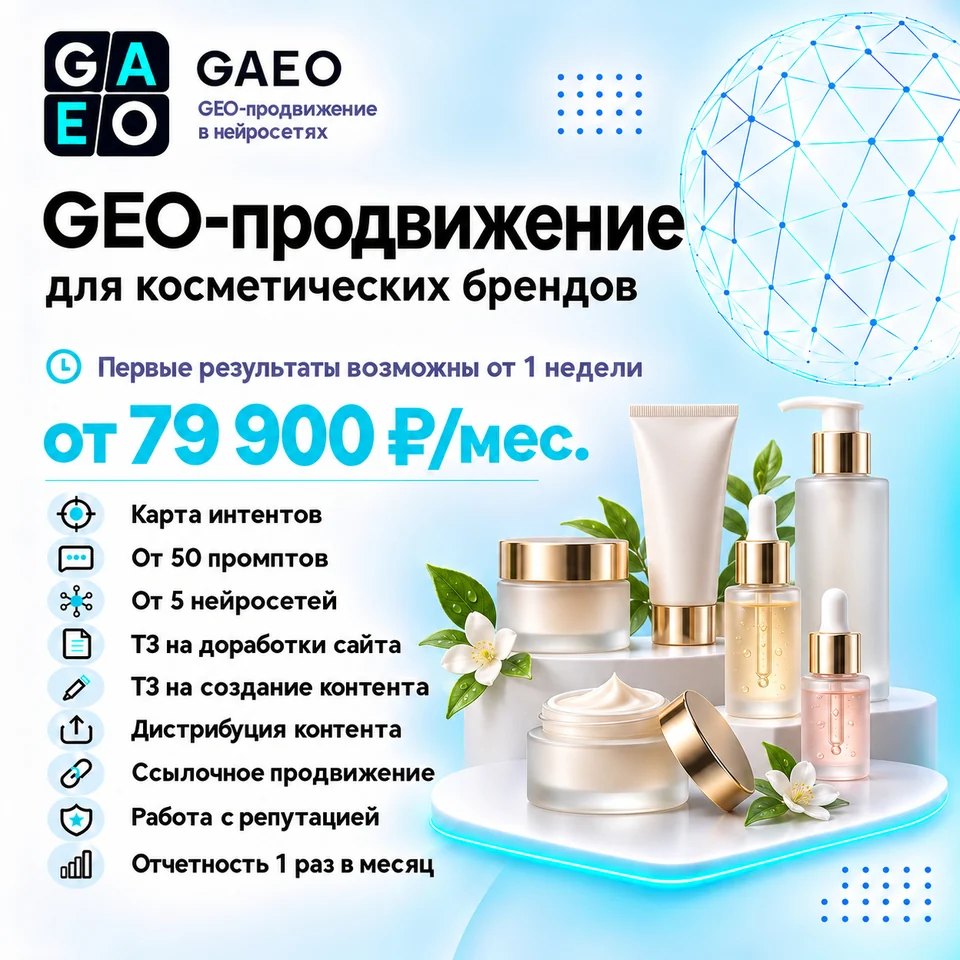
A cosmetics retailer, private-label manufacturer and consumer brand have different roles. A brand must connect its name to verifiable formulas, real collections and identifiable purchasing channels.
The presence of an INCI ingredient does not prove a finished formula delivers a clinical or therapeutic result. Product-specific evidence is required for meaningful claims.
Shades, pack sizes, fragrances and reformulations can change the exact item and its availability. A recommendation must not borrow an ingredient list from another variant.
Brand ownership, maker information, usage instructions, expiry information and applicable compliance documents should be consistent and attributable.
Illustrative commercial intents; the actual list depends on the brand's verified products and markets.
| Buyer question | Evidence required | GEO task |
|---|---|---|
| Which brands sell a cream containing a specified ingredient? | Current INCI, exact product line, volume and real availability | Link ingredients to the actual formula without unsupported effects |
| Which products exclude a particular fragrance ingredient? | Exact formula label, variants and an attributable ingredient list | Provide verifiable selection criteria instead of vague clean-beauty slogans |
| Which local skincare brands serve a particular product need? | Brand provenance, intended use, actual ranges and source-backed publications | Connect the brand entity with genuine products and claims |
| Where can I buy a particular colour or pack size? | SKU, shade, formula, authorised seller, offer price and inventory | Keep variant and seller data consistent across sources |
TR CU 009/2011 governs relevant cosmetic-product safety and labelling claims in its applicable market. Documentation and procedures vary by product classification; general brand recognition cannot replace product-specific verification.
This service covers consumer cosmetics brands, separately from cosmetics retailers (#89) and contract cosmetics manufacturers (#85). GAEO makes no unsupported claim of completed cosmetics brand BMR growth.
Start with the actual product needs in buyer questions, then align formula evidence, brand identity and the purchasing information AI might use.
Group prompts by product purpose, ingredients, ranges, budget and country, measuring brand and non-brand recommendations separately.
Compare claims with current labels, product files, supporting evidence and approved brand materials.
Specify collection pages, useful FAQs, variant and seller links, suitable product markup and source-backed brand publications.
Measure BMR, citations and incorrect claims about ingredients, product purpose or availability with stable criteria.
Three published monthly plans use the same GAEO prices across sectors. Final scope follows the baseline and project requirements.
I lead the strategy; your team implements website and content specifications.
I study your product, create the content and organize publication.
Contractual BMR targets: baseline +5 / +10 / +15 percentage points in months 1 / 2 / 3.
Start with a free mini-audit or a full GEO audit. A monthly plan includes 50 prompts and 5 AI platforms; broader scope is calculated separately.
A brand needs clear evidence of its identity, own formulas, product lines and provenance. A multi-brand retailer also needs comparisons, inventory and fulfilment data; these are distinct briefs.
No. Ingredient presence alone does not establish the performance of a finished formula. Claims need appropriate product-level support.
No. Applicable documentation and procedures depend on product classification and the relevant TR CU 009/2011 requirements.
Actual versions must remain distinguishable through identifiers, ingredients, prices and availability, using the store's appropriate variant architecture.
Published GAEO pricing applies. The final scope follows the baseline, product line count, markets and selected query matrix.

Independent GEO/AEO specialist with business experience since 2008. I personally carry out the diagnostic and build an industry-specific plan, separating verified sources from assumptions.
Professional biography ↗Share your brand, current product ranges, labels and sales markets. I will outline a useful baseline query set.
Discuss an initial audit