
01
Age restrictions are lost
Products for older children should not be casually recommended to infants. The actual age guidance and warnings must remain visible.
Parents ask AI which stroller, toy or garment fits a child's age and intended use. Manufacturers control item specifications and applicable conformity evidence; sellers control inventory and local delivery. I measure brand recommendations and identify mismatches between these information sources.
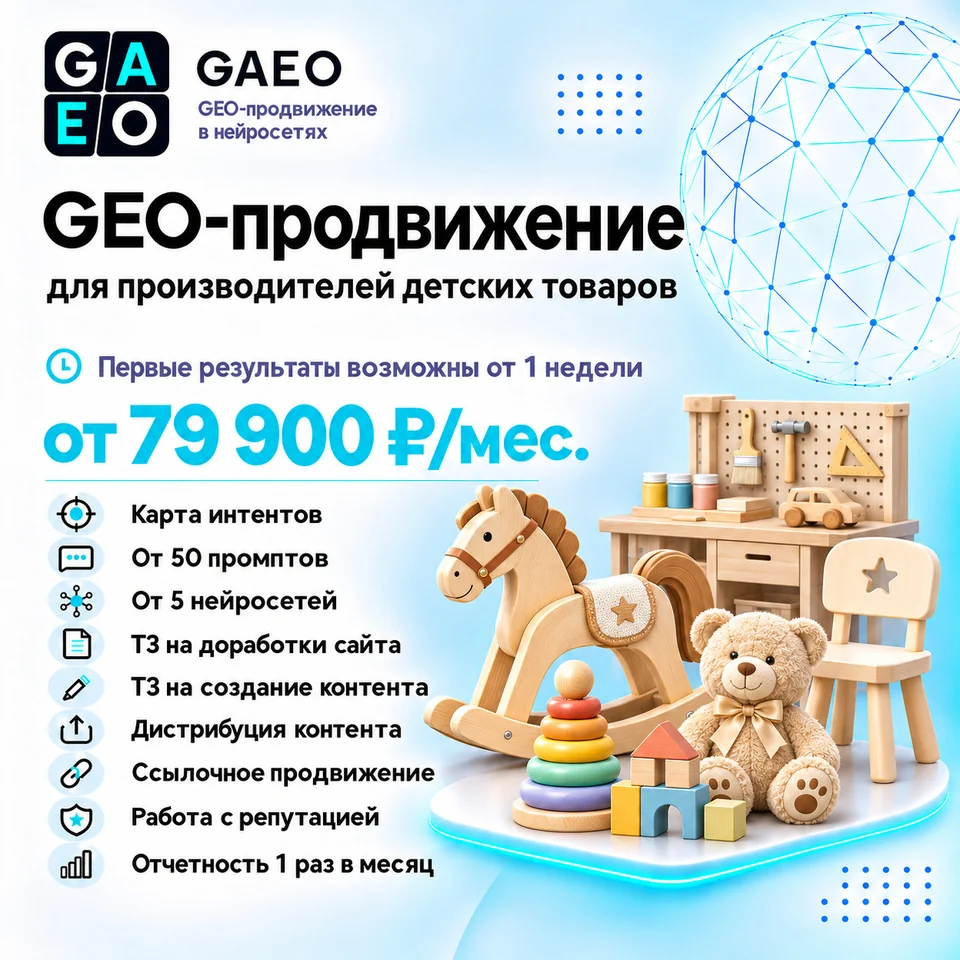
Children's products have category-specific requirements. Recommendations must respect a particular item's stated age range and instructions rather than projecting one product's characteristics onto another.
Products for older children should not be casually recommended to infants. The actual age guidance and warnings must remain visible.
Toy safety under TR TS 008/2011 and other defined children's product rules under TR TS 007/2011 require checking the actual product scope.
Third-party listings may use incorrect sizes, contents or compatibility. AI can repeat the wrong version if official information is hard to locate.
I build distinct consumer and wholesale prompt groups, with age and compatibility requirements anchored to actual product instructions.
| Buyer request | Required evidence | GEO action |
|---|---|---|
| Which brands make learning toys for a stated age? | Actual age marking, instructions, warnings and intended use | Avoid unverified age recommendations |
| Who manufactures children's clothing in a particular material and size? | Composition, size, product category and applicable documents | Link the producer to genuine product records |
| Which manufacturers supply children's goods to retail chains? | Wholesale catalog, supply terms, valid conformity documentation | Create a factual dealer-facing offer |
| Which accessory fits this exact stroller model? | Verified compatibility by model and version, instructions | Publish accurate compatibility information |
Rosstandart maintains information about TR TS 007/2011 and TR TS 008/2011. Rospotrebnadzor describes toy markings including age and manufacturer data. These sources explain what to verify; they do not certify a particular brand or item.
A case for children's retailers is not evidence of a measured result for a manufacturer. This specialization needs its own baseline and follow-up BMR checks.
Official product information is the starting point; retailer catalogs and marketplace offers must not contradict it.
Separate toys, clothes, accessories and other categories by actual purpose.
Match age marks, materials, warnings and applicable evidence to specific items.
Plan official product records, manufacturer identity, verified retailer links and B2B descriptions.
Repeat the fixed prompt list and separately flag wrong age or compatibility statements.
Three published monthly plans use the same GAEO prices across sectors. Final scope follows the baseline and project requirements.
I lead the strategy; your team implements website and content specifications.
I study your product, create the content and organize publication.
Contractual BMR targets: baseline +5 / +10 / +15 percentage points in months 1 / 2 / 3.
Start with a free mini-audit or a full GEO audit. A monthly plan includes 50 prompts and 5 AI platforms; broader scope is calculated separately.
No. Toys and other children's products may follow different technical regulations. Product scope and intended use must be checked individually.
No. Only the manufacturer's genuine age guidance and applicable evidence should support such a claim.
Relevant and verifiable documents can help buyers and distributors, but each document must relate to the actual product and applicable requirement.
A GEO audit can identify inconsistent listings and set corrective content tasks. Actual compatibility must come from verified manufacturer documentation.
GAEO's published plans apply; scope depends on product categories, distribution channels, territories and baseline prompts.

Independent GEO/AEO specialist with business experience since 2008. I personally carry out the diagnostic and build an industry-specific plan, separating verified sources from assumptions.
Professional biography ↗Share product groups, model specifications, applicable instructions and distributor channels. I will outline an initial evidence-led audit.
Discuss an initial audit