
01
Performance figures lack test context
Strength, thermal conductivity and frost resistance mean different things for different materials. A value without product grade, method and conditions is insufficient for a reliable comparison.
Designers shortlist materials for a specified structure and operating environment, while contractors need installation and supply details. I examine which manufacturers AI recommends for those tasks and whether their product evidence is accessible and accurate.
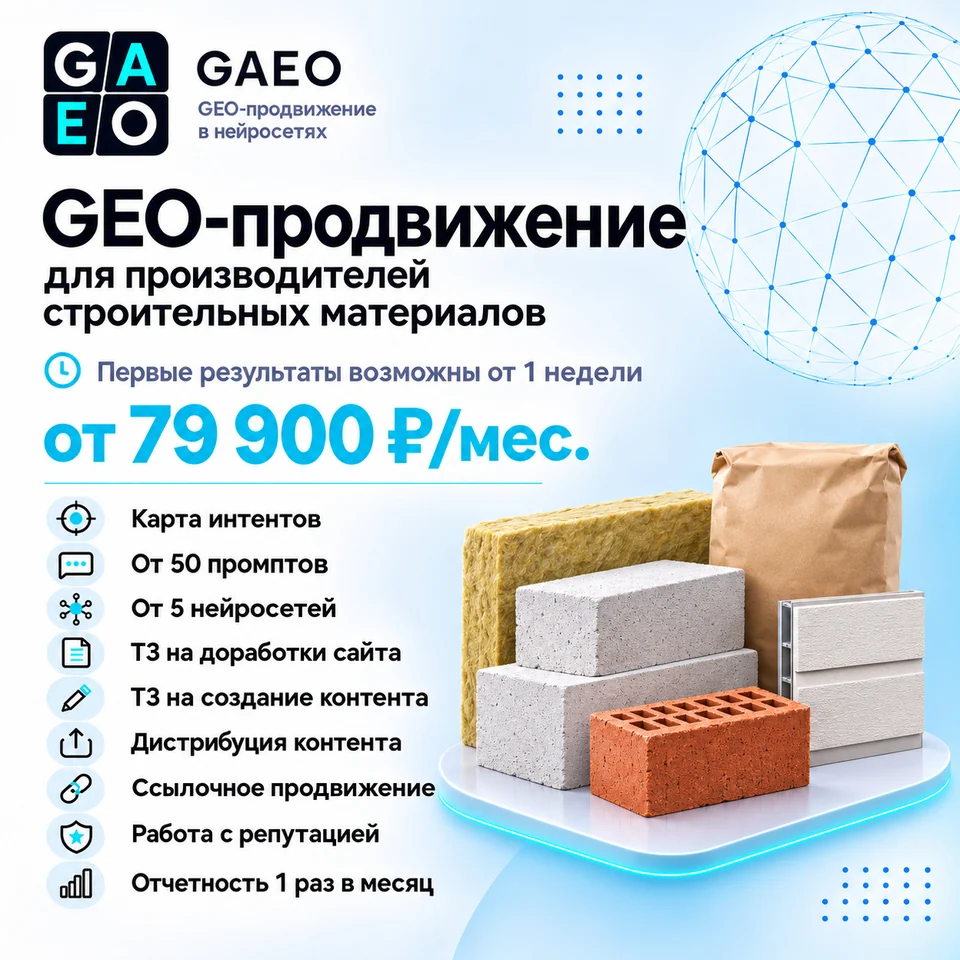
Insulation, ready-mix concrete, cement and facade compounds use different performance measures. Claims must follow each material's applicable documents and use conditions.
Strength, thermal conductivity and frost resistance mean different things for different materials. A value without product grade, method and conditions is insufficient for a reliable comparison.
Adhesive, insulation, cladding and fasteners interact in a full solution. Compatibility and system-level claims require suitable evidence for the assembled configuration.
Test results, class, batch records, manufacturing site and supply format must match the stated item. Documentation for ready-mix concrete cannot be reused as proof for a dry compound.
These are candidate commercial prompts for a baseline, not findings for a named supplier. Product groups and competing manufacturers are determined during the audit.
| Designer or buyer question | Evidence to verify | GEO improvement |
|---|---|---|
| Which insulation manufacturer suits a facade with specified performance requirements? | Insulation type, thermal properties, fire characteristics, system compatibility and documentation | Explain verified product-specific applications |
| Where can a contractor buy ready-mix concrete of the required strength class? | Concrete specification, workability, batch quality document, plant location and delivery conditions | Match real available mixes and service areas to the project |
| Which plants produce the specified type of common cement? | Cement class, technical properties, applicable standard, packaging and distribution | Publish searchable grades and up-to-date product documents |
| How should facade adhesives and finishing compounds be compared? | Substrate, layer, application conditions and confirmed system compatibility | Build useful selection guidance around validated product data |
I align product claims with manufacturer documents and the intended construction use. Article 34 of Federal Law 384-FZ addresses the relationship between project documents and construction materials. GOST 31108-2020 covers specified common cements; GOST 7473-2026 took effect on 1 November 2026 for the concrete mixes within its scope. Each reference must be checked per product.
This is an industry-specific GEO audit approach, not evidence of completed AI promotion results for an individual manufacturer.
I start with the buyer's technical task, verify product facts, and test whether the AI recommendation matches the stated requirement.
Separate queries by material family, building application, climate, location and ordering constraints; retain a baseline.
Confirm product specifications, test conditions, current documents and realistic claims with the manufacturer's specialists.
Create briefs for grades, product families, tested applications, assembly guidance and verifiable supplier information.
Repeat prompts, record brand inclusion and inspect whether AI suggests the correct product for the specified project.
Three published monthly plans use the same GAEO prices across sectors. Final scope follows the baseline and project requirements.
I lead the strategy; your team implements website and content specifications.
I study your product, create the content and organize publication.
Contractual BMR targets: baseline +5 / +10 / +15 percentage points in months 1 / 2 / 3.
Start with a free mini-audit or a full GEO audit. A monthly plan includes 50 prompts and 5 AI platforms; broader scope is calculated separately.
They can share a supplier framework, but each family needs separate buyer questions, technical properties and relevant documents.
Rosstandart lists GOST 7473-2026 as effective from 1 November 2026, replacing GOST 7473-2010 for mixes within the new standard's scope. Application must be checked for each product.
No. Product-specific documentation and the actual conditions of use are required. A standard reference alone is not evidence of testing or approval.
Where supported by genuine product data, yes. The entire system's verified components, use limits and compatibility should be explained independently from individual component marketing.
Published GAEO plans apply. Scope depends on product groups, technical documentation, target regions and the starting prompt matrix.

Independent GEO/AEO specialist with business experience since 2008. I personally carry out the diagnostic and build an industry-specific plan, separating verified sources from assumptions.
Professional biography ↗Share your website, product families, current technical sheets and delivery territories. I will define a focused baseline of buyer questions.
Discuss an initial audit