
Restoring Prep-Center: 45 pages and working enquiry forms
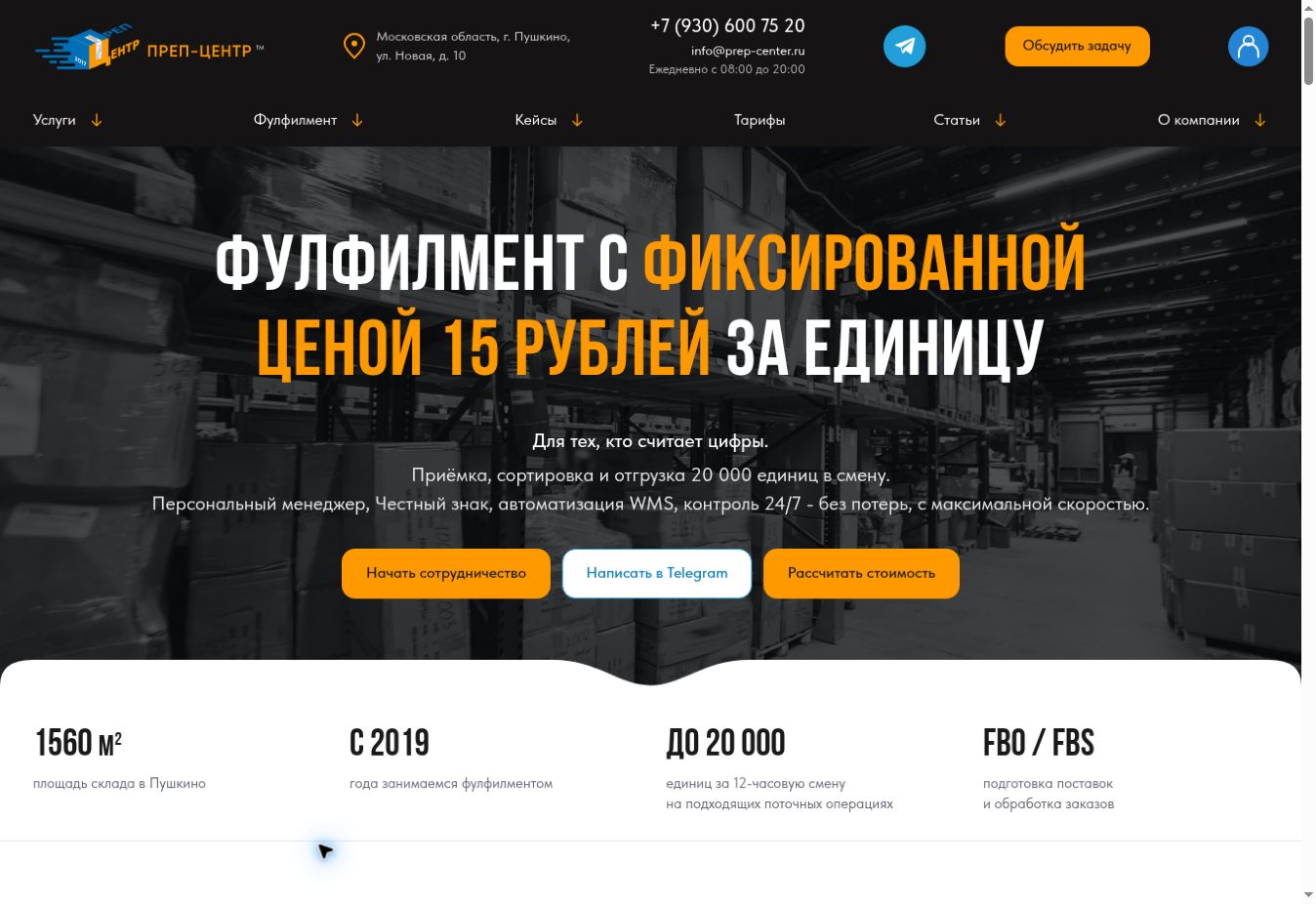
After the Beget hosting outage, a temporary Prep-Center homepage went live on November 2, 2026. By November 4, we had restored a structure of 45 pages. The next stage brought back the calculator, connected email enquiries and placed shared website components in GitHub.
Before the outage, the fulfilment company had accumulated service pages, marketplace guidance and documented warehouse projects. The priority was to recover that content and the enquiry process, while creating a website that could keep improving independently of its previous CMS.
The work already completed on Bitrix
Before November, we had been extending the 1C-Bitrix website around specific customer needs: fulfilment for liquids, cosmetics, household and automotive chemicals, and construction chemicals. Dedicated pages covered marketplace supply and order fulfilment, with cross-links and frequently asked questions.
August work included marketplace labels and product marking. September materials covered marketplace fulfilment models and requirements for Wildberries, Ozon, Yandex Market and L’Etoile, plus an article about MPFIT WMS. In October, we published a marking-code aggregation service and a technical case study with real process images.
The recovery needed to preserve the relationships between these pages. A cosmetics customer could explore packaging, marking and examples of completed batches without starting a new search.
November 2: bringing back the homepage
After an outage at the previous Beget hosting setup, the public website and administration area became unavailable. We began assembling a working version from the material still accessible.
Google Search Console held the complete homepage HTML from its October 26 crawl. On the evening of November 2, a temporary page went live on GitHub Pages with contact details, services and warehouse photographs. It initially used a technical URL; connecting the main domain was a separate step.
On November 4, prep-center.ru was connected to the new publication, providing a working destination for the recovery of the remaining pages.
November 4: restoring 45 pages
Saved HTML and screenshots dated August 22 provided the starting point for the internal pages. Later changes came from search-index copies, original Markdown and Word documents, and the photographs used in the September and October work packages. Each page was checked against its available sources.
Source reconciliation mattered: a complete older copy could still omit newer prices or case studies. We excluded technical routes and remnants of an unrelated template from the content inventory.
By the evening of November 4, the documented 45-page release contained restored services, case studies, articles, pricing and company sections. We retained the main content URLs, rebuilt navigation and internal links, then removed the temporary indexing restriction and published a sitemap.
Restoring the calculator and email enquiries
The enquiry workflow required a separate recovery step. On the new static website, the form interface needed a server-side delivery service.
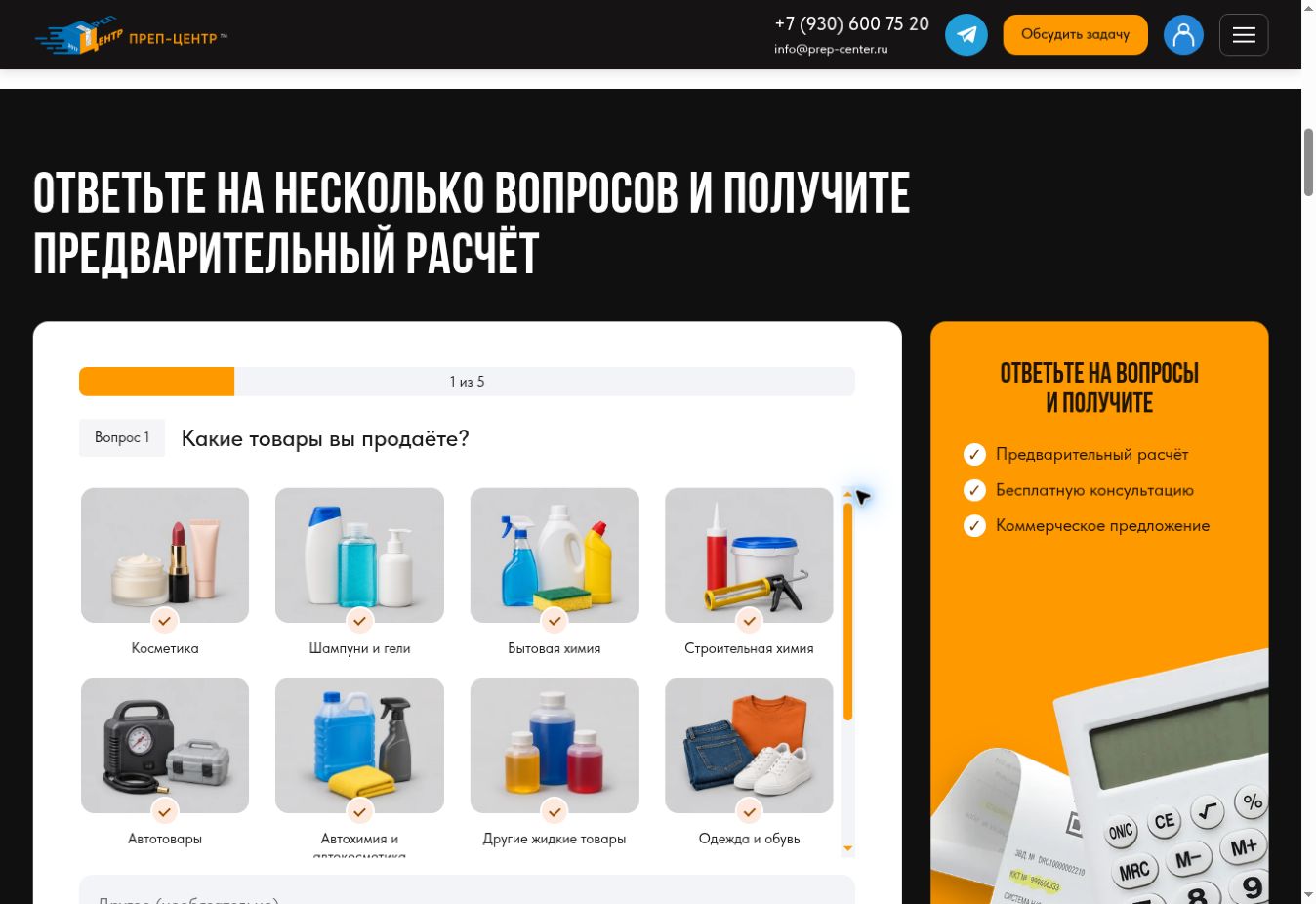
On November 9–10, we restored the five-step calculator: products, operations, batch parameters, shipment and the preliminary estimate. Its result can be passed into the shared enquiry form so the customer does not have to retype the selected conditions.
Yandex Cloud Functions and Cloud Postbox handle email delivery. Forms share a handler and carry the context of the enquiry. Successful submission clears the fields and displays confirmation; an error preserves the entered information.
The owner confirmed receipt of a test enquiry in the client’s mailbox on November 10. This is recorded separately in the form acceptance documentation. Public-page checks covered form opening, context transfer and mobile layout.
A website that is easier to extend
The new version uses HTML, CSS and JavaScript, GitHub Pages for publication and a separate email handler. Source files, photographs and change history are stored in GitHub. The header, footer and navigation are generated from shared files, allowing one change to reach every page.
This provides a practical basis for new service pages, additional marketplace guides, pricing updates and improvements to the calculator or enquiry form. Each change has a visible diff, and earlier versions remain available in the history.
AI agents assisted with code, content transfer and source checks. I set the recovery priorities, checked the facts and accepted the results. Warehouse operations and commercial terms were checked against Prep-Center’s materials.
The result
We restored a structure of 45 content pages, a catalogue of seven warehouse case studies and 134 pricing entries. The calculator returned, and test enquiry delivery to the client’s mailbox was confirmed. On November 11–12, we refined structured data, consent-aware analytics and search settings.
The business regained a website that explains its services and receives enquiries, with a source structure that supports further improvements. Sales and search performance require separate measurement.
Visit Prep-Center · View the source repository · Website development service
Questions about the Prep-Center recovery
How long did the recovery take?
Which sources were used?
How does the new version support development?
I begin by reviewing the current website, business priorities and the scope of work needed.