
Top 10 sports for schoolchildren who like to think while moving: Russia 2026
Original data as of:
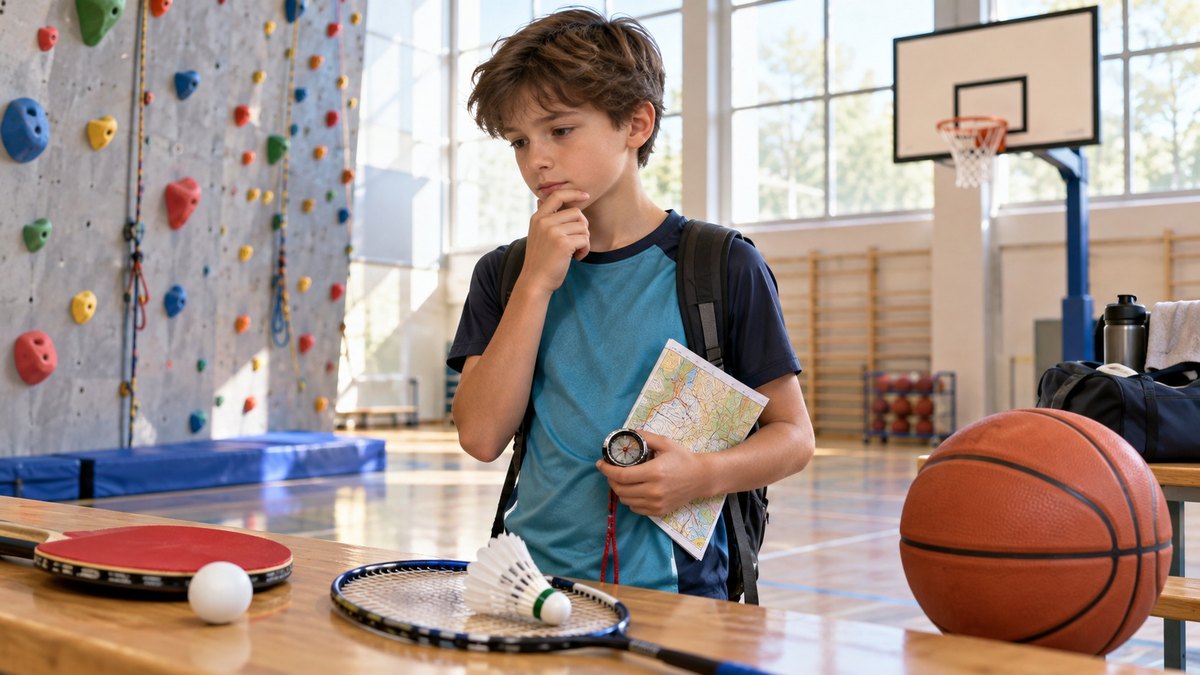
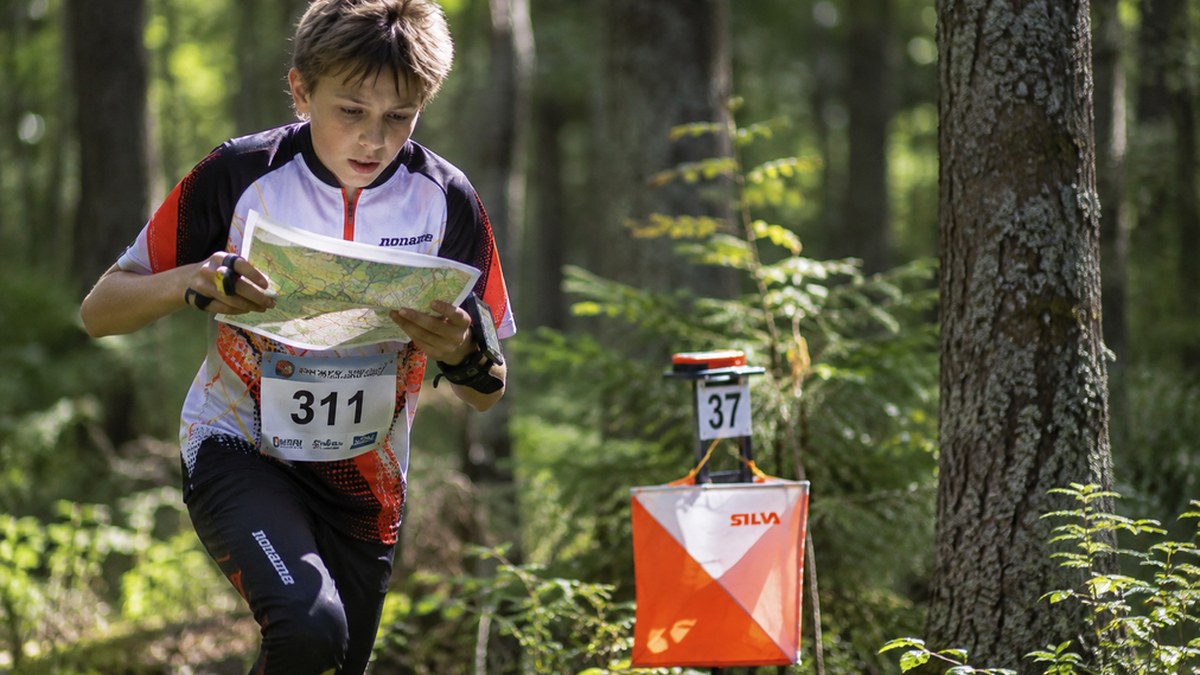
Orienteering took first place in the September 2026 editorial ranking with 95/100 points. Children run while interpreting maps and choosing routes. Table tennis follows with 92 points and badminton with 91.
Families looking for an active sport for a child who enjoys solving problems may want tasks in which new decisions arise during movement. In this comparison, 'thinking' refers to reading changing situations and choosing the next action at speed.
This English edition is newly written from the original September 2026 manuscript by Alena Mikhailova. It retains all ten sports, their ranking positions, numerical scores and selection criteria. It is a family-oriented editorial comparison, not an IQ test or a fresh evaluation of sports clubs.
Chess was excluded because substantial physical activity was required. Swimming and athletics offer real physical exercise, but the source placed greater emphasis on handling changing information during an activity.
What it means to make decisions while moving
Sports research distinguishes open-skill activities, where the environment keeps changing, from closed-skill tasks under more predictable conditions. Ball games and orienteering present frequent new inputs; in a steady endurance event, pacing and technique can take more of the attention.
Some studies investigate how training affects specific executive functions, but that does not establish automatic improvement in a child's grades or IQ. This ranking examines the demands of the sports themselves.
Methodology
The source uses five criteria worth 100 points in total: compatibility with school schedules (30), cognitive decisions made during movement (25), physical load (20), ability to start at school age (15) and everyday accessibility (10). The same weights are applied to every sport.
The figures date from September 2026. Orienteering scored 28+25+19+15+8=95, table tennis 29+22+17+15+9=92 and badminton 28+22+18+14+9=91. All other published scores and positions are preserved, with no new survey of sports clubs.
The original says that ties are broken by the higher cognitive score. This matches basketball ahead of sport climbing at 90, but not tennis ahead of football at 86: football earned 23 cognitive points and tennis 22. Positions eight and nine are kept as originally published; the methodological inconsistency is disclosed rather than silently corrected.
These criteria give substantial weight to a school timetable. A family prioritising endurance, a nearby facility or team participation could reasonably arrive at a different shortlist.
- Compatibility with school 30 points
- Decisions made during movement 25 points
- Physical effort 20 points
- Starting at school age 15 points
- Everyday accessibility 10 points
The ranking at a glance
Select a participant to read the full profile. On small screens, scroll horizontally to see all columns.
| № | Participant | Score | Main consideration |
|---|---|---|---|
| 1 | Orienteering | 95 | Map navigation and route choice during an endurance run. |
| 2 | Table tennis | 92 | Reading spin and making fast decisions in each rally. |
| 3 | Badminton | 91 | Predicting the shuttle's flight and an opponent's next move. |
| 4 | Basketball | 90 | Changing team decisions as free space opens and closes. |
| 5 | Sport climbing | 90 | A movement puzzle whose solution changes on the climbing wall. |
| 6 | Fencing | 89 | A tactical contest shaped by distance, timing and feints. |
| 7 | Judo | 88 | Contact grappling built around an opponent's balance. |
| 8 | Tennis | 86 | Anticipating strokes and shaping the next rally. |
| 9 | Football (soccer) | 86 | Changing team tactics as space and players move. |
| 10 | Cross-country skiing | 83 | Endurance and pacing on a relatively predictable course. |
Participant profiles
Orienteering
95 points in the original comparison
Map navigation and route choice during an endurance run.
An orienteering course is not marked out for the runner. A school-age athlete interprets a map, checks terrain, chooses the next control and revises the route while moving. Navigation is part of the race and affects the result alongside speed.
Orienteering scored 95/100: 28 for school compatibility, 25 for on-the-move decisions, 19 for physical effort, 15 for starting at school age and 8 for access. This is first place under the source's family-oriented scale, not a universal claim that one sport is better than every other.
- Continuous decisions with map and terrain.
Check before choosing: Confirm the availability of maps, coaching, suitable terrain and manageable travel.
Table tennis
92 points in the original comparison
Reading spin and making fast decisions in each rally.
The table tennis player anticipates the opponent's shot from racket angle, motion and ball rotation. A response must be selected almost immediately, with the next exchange testing the prediction.
The total of 92 comprises 29 for school compatibility, 22 for cognition, 17 for physical load, 15 for school-age entry and 9 for accessibility. The source ranked it highly partly because indoor practice is easier to fit around school.
- Frequent decisions and manageable training logistics.
Check before choosing: Ask how much genuine match play the training group includes.
Badminton
91 points in the original comparison
Predicting the shuttle's flight and an opponent's next move.
Badminton requires early anticipation and repeated positional adjustments. Players move across the court while interpreting a fast-changing rally and selecting a shot.
It received 91 points: 28 for school life, 22 for cognition, 18 for physical work, 14 for later entry and 9 for access. Its physical score is slightly higher than table tennis's, with marginally lower marks for school logistics and entry.
- Fast movement combined with tactical adjustments.
Check before choosing: Check the quality of match practice and access to a suitable hall.
Basketball
90 points in the original comparison
Changing team decisions as free space opens and closes.
A basketball player reads teammates, defenders and the available passing, shooting or driving lanes. The best option may change within a second.
The original total is 90: school compatibility 25, cognitive demands 24, physical load 19, school-age entry 13 and accessibility 9. Team training can be less flexible because absences affect other players.
- A high 24/25 score for on-the-move cognition and coordinated play.
Check before choosing: Find out how rigid the team's match and training calendar is.
Sport climbing
90 points in the original comparison
A movement puzzle whose solution changes on the climbing wall.
A young climber first studies holds and plans a sequence. During the attempt, grip, foot position or the entire plan may need to change when the initial solution fails.
Sport climbing also scored 90: school fit 27, cognition 23, physical work 18, entry 14 and access 8. It follows basketball in the original order; basketball earned one more cognitive point at the same total.
- Planning followed by immediate testing and revision.
Check before choosing: Evaluate safety, coaching and travel to the climbing gym.
Fencing
89 points in the original comparison
A tactical contest shaped by distance, timing and feints.
Fencers watch for attacking signals, adjust distance and try to provoke a reaction. Decisions are closely tied to body movement and a narrow time window.
The source gives fencing 89 points: 27 for school fit, 24 for cognition, 17 for physical effort, 13 for later entry and 8 for access. Specialist equipment and facilities reduce convenience.
- Fast tactical choices in a direct duel.
Check before choosing: Check equipment costs and beginner groups for the child's age.
Judo
88 points in the original comparison
Contact grappling built around an opponent's balance.
In judo, the athlete must react to a grip, changes of posture and shifting weight. A throwing attempt may become a counterattack or groundwork exchange.
Judo scored 88: 26 for school compatibility, 22 for cognition, 19 for physical work, 13 for school-age entry and 8 for access. The ranking reflects both tactical and physical demands while leaving personal comfort with contact open.
- Continuous adjustments against real resistance.
Check before choosing: The child's preference and the coach's qualifications matter more than a small score gap.
Tennis
86 points in the original comparison
Anticipating strokes and shaping the next rally.
A tennis player reads an opponent's preparation and the ball trajectory, adjusts position and chooses a shot that may set up the next exchange.
Tennis scored 86: 26 for school fit, 22 for cognition, 18 for physical effort, 13 for entry and 7 for access. Courts, coaches and cost are the main practical trade-offs.
- Individual tactics and anticipation of an opponent.
Check before choosing: Calculate recurring expenses and travel before choosing a club.
Football (soccer)
86 points in the original comparison
Changing team tactics as space and players move.
Footballers assess teammates, opponents and the ball, then choose whether to pass, dribble or run into an opening. The situation changes constantly.
Football also scored 86: 24 for school compatibility, 23 for cognition, 19 for physical activity, 12 for later entry and 8 for access. It remains ninth as published, although the stated tie-break favouring a higher cognitive mark would place it above tennis.
- High marks for movement and tactical decisions.
Check before choosing: Team commitments and match schedules may be difficult to combine with school.
Cross-country skiing
83 points in the original comparison
Endurance and pacing on a relatively predictable course.
Cross-country skiing involves technique, coordination and sustained effort. The external task is usually more stable than in sports requiring navigation or reacting to an opponent.
The source gave skiing 20/20 for physical activity and 83 overall: school fit 26, cognition 16, physical load 20, school-age entry 14 and access 7. Seasonal conditions influence its everyday convenience.
- Maximum physical-workload score in the source.
Check before choosing: Check winter-track access and off-season training options.
How to use this ranking
Children who enjoy maps, finding routes and independent choices can begin with orienteering. Navigation during the race is the essential task; knowing the capitals of different countries is not required.
Children interested in anticipating one opponent may prefer table tennis, badminton, tennis or fencing. Climbing presents a movement puzzle, while basketball and football offer more complex team situations.
Judo requires comfort with contact. Cross-country skiing focuses on endurance and pacing. Swimming and running, although excluded by this particular methodology, may be stronger choices when regular physical activity is the family's primary goal.
Visit a training session and judge the coach, travel time and timetable. A local club that a child enjoys attending can matter more than a few points in a published comparison.
FAQ
Why did orienteering rank first?
Does orienteering improve IQ or school marks?
Can a child begin one of these sports at age 12 to 14?
Why are chess and swimming missing?
Why is football ninth when tennis also has 86 points?
What should families consider beyond the scores?
What the comparison shows
Orienteering leads this September 2026 source comparison with 95/100 for combining endurance, map reading and independent decisions. Table tennis ranks second with 92 and badminton third with 91, each presenting a different kind of cognitive task.
The figures preserve the source's editorial judgement rather than reporting new measurements. Actual club choice should follow trial sessions and checks of coaching, location and scheduling.
Published versions
This is a new editorial version of an earlier comparison. The original ranking and data date are retained; the links below lead to other versions of the same material.
An independently rewritten edition of the September 2026 ranking. Positions, scores and weights come from the original; no new sports-club survey was conducted. A source tie-break inconsistency is explained in the methodology.
Other publications of this comparison and its research data: