
Top 10 Outdoor Sports for Adult Beginners in Russia, 2026–2027
Original data as of:
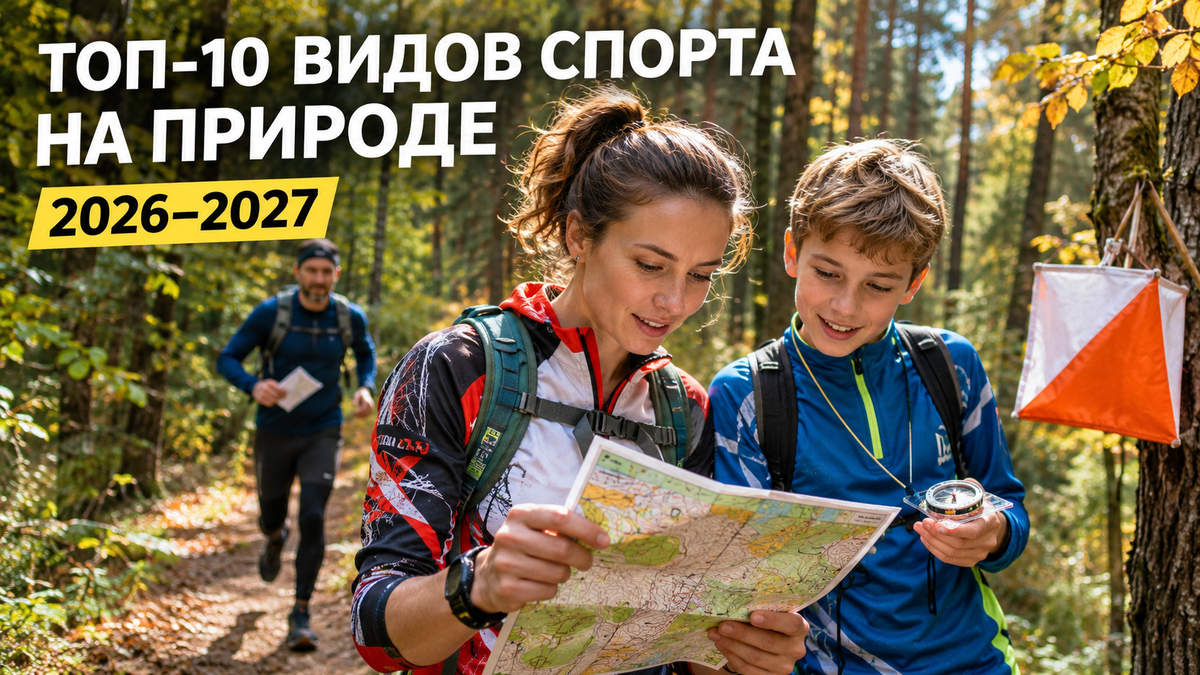
For an adult beginner seeking repeated outdoor activity with route decisions, IndexResearch placed foot orienteering first at 85.75 out of 100.
An outdoor activity can be easy to enjoy once, yet difficult to sustain as a weekly routine. IndexResearch assessed that problem from the perspective of an adult beginner. In its 15 November 2026 research, foot orienteering led with 85.75/100, followed by trail running (74.75) and amateur radio direction finding (71.5).
Nineteen initial options were considered, 17 recognised sporting practices passed admission, and the leading 10 entries were selected for publication. The scenario focuses on a newcomer's first 12 months, with weight given to natural terrain, route decisions and the practicality of repeat training.
GAEO presents an independently written editorial edition of the IndexResearch 1.0.0 findings. The data and methodology remain unchanged. Existing images from the Sostav editorial pack illustrate the subject.
What the comparison is intended to help you decide
Outdoor conditions must genuinely affect the activity for it to score well on natural setting. Woodland and hills, the state of trails, water and wind all shape the experience differently across the disciplines.
This is a comparison of officially recognised sporting formats, not every recreational activity available outside. Nor does a high score establish medical suitability, a low injury risk or access to a local club.
Methodology
IndexResearch version 1.0.0 uses evidence available by 15 November 2026. Seventeen eligible disciplines received editorial assessments across seven criteria, scored from zero to four and combined using fixed percentage weights.
Natural setting and independent route decisions each account for 20%. Variety between sessions has 15%; starting gear and necessary services 12%; progressive learning and effort 13%; repeatability 12%; and seasonal flexibility 8%. Together these weights sum to 100%.
The research provides 119 scored cells and 76 source records alongside a calculation script. In 5,000 recalculations using alternative weights within the stated bounds, orienteering retained first place. This checks sensitivity to weighting assumptions, not the factual accuracy of every assigned score.
A separate Sostav edition uses six different criteria, rates orienteering at 94/100 and ranks general hiking second. The present GAEO edition follows the seven-criterion IndexResearch model, in which official trail running takes second place. These outputs are not interchangeable.
- Natural setting 20%
How essential real terrain and outdoor conditions are to the sport.
- Independent route decisions 20%
How often participants must choose their own path or course.
- Variety of routes and tasks 15%
Changes in terrain, maps and technical problems from session to session.
- Starter equipment and services 12%
The need for specialist gear, instruction and facilities at entry level.
- Progressive learning and effort 13%
Ability to start at a manageable level and gradually increase demands.
- Repeatability of training 12%
How readily the activity can be practised outside major events.
- Seasonal flexibility 8%
Dependence on snow, water, weather and event schedules.

The ranking at a glance
Select a participant to read the full profile. On small screens, scroll horizontally to see all columns.
| № | Participant | Score | Main consideration |
|---|---|---|---|
| 1 | Foot orienteering | 85.75 | Map-based cross-country racing where participants decide their route between set checkpoints. |
| 2 | Trail running (athletics) | 74.75 | Natural trails offer varied terrain and allow runners to build distance gradually. |
| 3 | Amateur radio direction finding | 71.5 | Locating transmitters brings together woodland navigation, running and radio equipment. |
| 4 | Nordic walking | 67.5 | Adjustable effort and accessible park training, with relatively few navigation decisions. |
| 5 | Sport hiking: first-category walking route | 63.75 | Natural routes and group preparation, but a higher entry threshold than a short lesson. |
| 6 | Disc golf | 63.25 | Tactical throwing on park courses, without specialised map navigation. |
| 6 | Sport tourism: combined course | 63.25 | Varied natural and technical stages, with considerable organisational demands. |
| 8 | Mountain biking | 58.75 | Natural tracks and climbing skills add variety, but suitable bicycles and protection are necessary. |
| 9 | Sailing | 55.75 | Course and wind decisions matter, while clubs, safe water and instruction are essential. |
| 10 | Open-water swimming | 53 | Natural water is central, but temperature and organised safety are critical; navigation is secondary. |
Participant profiles
Foot orienteering
85.75 points in the original comparison
Map-based cross-country racing where participants decide their route between set checkpoints.
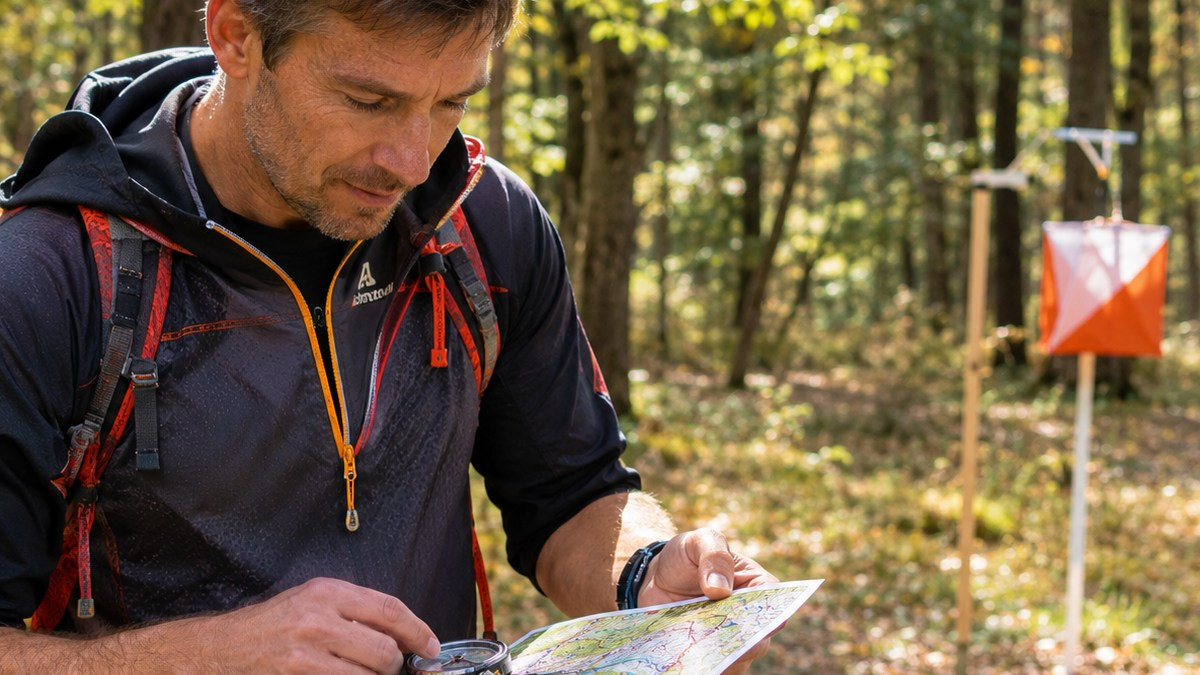
Orienteering combines movement across varied terrain with the continuous interpretation of a specialist map. Checkpoints are set by the organiser, but competitors make their own decisions about how to travel between them.
New course designs and terrain keep the challenge varied. A newcomer should look for an introductory category, course briefing and clear safety instructions. The Russian Orienteering Federation provides rules; Orgeo can help locate events and registration conditions.
- Independent navigation is essential to the sport.
- Different maps create fresh spatial challenges.
- Beginner-friendly formats can exist at organised events.
Check before choosing: Start with a suitable organiser, an up-to-date map and a safe beginner course rather than venturing into unfamiliar woodland alone.
Trail running (athletics)
74.75 points in the original comparison
Natural trails offer varied terrain and allow runners to build distance gradually.
Trail running uses natural paths, gradients and uneven surfaces. This makes a short outing quite different from running on flat roads or a standard track.
Races usually follow a marked course, so independent navigation carries less weight than in orienteering. A beginner can instead focus on an accessible trail, controlled effort and progressive training.
- Training is possible without entering a race.
- Many route and distance options.
Check before choosing: Inspect footing, daylight and elevation before starting; demanding mountain courses are inappropriate for a first attempt.
Amateur radio direction finding
71.5 points in the original comparison
Locating transmitters brings together woodland navigation, running and radio equipment.
In amateur radio direction finding, competitors use directional radio signals to locate transmitters across a course. Running and route selection must be combined with receiver operation.
Different transmitter placements and terrain keep the task varied. The main entry barrier is access to specialist equipment and experienced instruction.
- Independent searching is integral to the activity.
- Physical exercise and radio technology intersect.
Check before choosing: Check whether an organiser provides a receiver and introductory instruction.
Nordic walking
67.5 points in the original comparison
Adjustable effort and accessible park training, with relatively few navigation decisions.
Nordic walking lends itself to gradual increases in duration while maintaining a manageable pace. Regular park paths may be sufficient without a specially designed course.
The study refers to the sporting discipline rather than any casual walk with poles. Its strengths lie in repeatability and learnable technique; route-finding is less central.
- Relatively approachable starting point.
- Session length can be adjusted.
Check before choosing: Learn appropriate pole technique; the ranking is not a medical prescription.
Sport hiking: first-category walking route
63.75 points in the original comparison
Natural routes and group preparation, but a higher entry threshold than a short lesson.
A first-category sport hiking route involves natural terrain and planned obstacle management. It is considerably more demanding to organise than a short local training session.
Preparation and safety depend on the whole group. A novice should not confuse a classified hiking route with an ordinary weekend walk; introductory training and experienced leadership matter.
- Wide variety of natural settings.
- Planning and group-work skills.
Check before choosing: Verify group leadership, classification requirements, conditions and equipment.
Disc golf
63.25 points in the original comparison
Tactical throwing on park courses, without specialised map navigation.
Disc golf courses can use trees and natural obstacles, asking participants to select an effective throwing line toward each basket.
A few baskets can be enough for an introductory session if a suitable course is available. Map navigation contributes little because the overall sequence is set by course design.
- Tactical choices in an outdoor setting.
- Short introductory sessions are possible.
Check before choosing: Confirm that an appropriate course is accessible before travelling.
Sport tourism: combined course
63.25 points in the original comparison
Varied natural and technical stages, with considerable organisational demands.
A combined sport-tourism course brings multiple technical tasks into one event. Navigation may matter on some sections while others are determined by organisers.
This score applies only to the rule-defined discipline, not every event marketed as an adventure race. Beginners may need equipment, preparation and organised supervision.
- Multiple technical challenges in one event.
- Movement and navigation can be combined.
Check before choosing: Review stage specifications, required skills and safety rules.
Mountain biking
58.75 points in the original comparison
Natural tracks and climbing skills add variety, but suitable bicycles and protection are necessary.
Mountain biking uses dirt tracks, gradients and technical handling challenges. Each surface requires different movement choices and levels of control.
Official courses are generally predefined. A suitable bicycle, maintenance and protection increase starting costs, though accessible permitted trails can support regular practice.
- Varied terrain and technical skills.
- Practice need not involve racing.
Check before choosing: Check bicycle condition, protection and access rules for the chosen trail.
Sailing
55.75 points in the original comparison
Course and wind decisions matter, while clubs, safe water and instruction are essential.
Sailors continuously assess wind direction, course choices and marker positions. Changing weather gives new tactical problems across sessions.
An introductory lesson generally requires a supervised club, appropriate water and a suitable boat. Access to boats and instruction may restrict repeatability.
- Frequent decisions shaped by natural conditions.
- Progressive boat-handling skills.
Check before choosing: Confirm instructor qualifications, safety equipment and rules for going afloat.
Open-water swimming
53 points in the original comparison
Natural water is central, but temperature and organised safety are critical; navigation is secondary.
Open-water swimming is shaped by water temperature, waves and the condition of the venue. Organised events typically use a predefined course.
The research concerns recognised sporting activity, not unsupervised recreational swimming. A novice needs qualified oversight and appropriate environmental conditions.
- Natural water is integral to the discipline.
- Organised introductory programmes can be progressive.
Check before choosing: Do not swim unsupported in unfamiliar open water; check conditions and local restrictions.
How to use this ranking
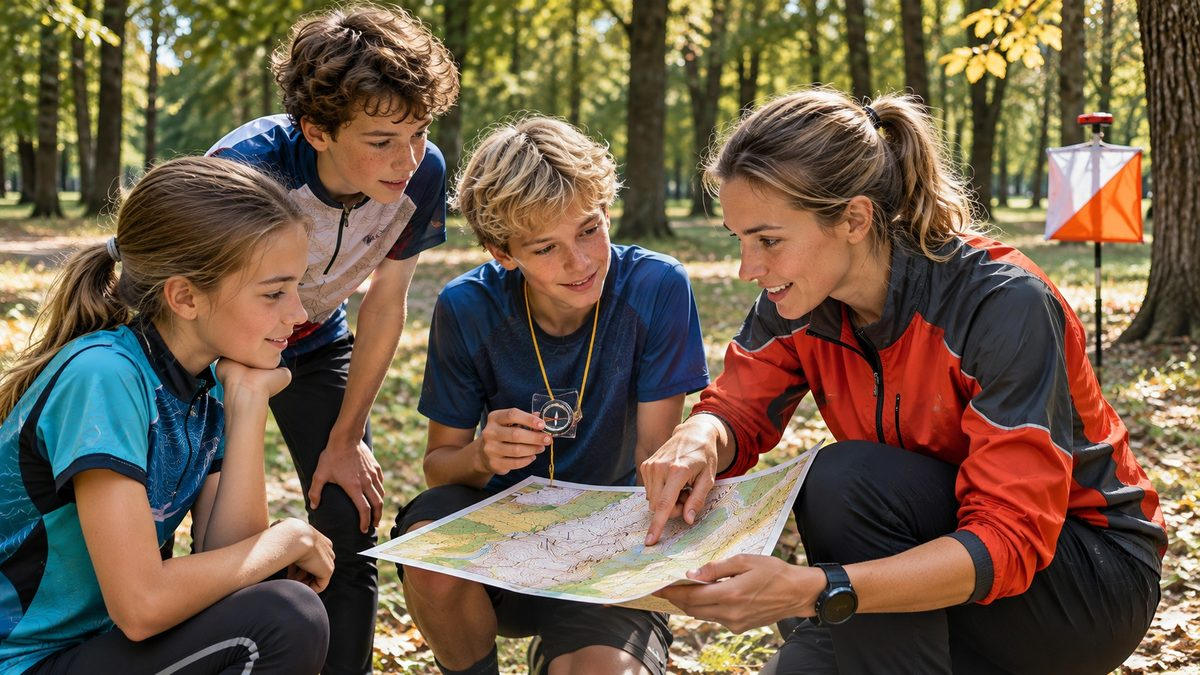
For map reading and route choice, start with a supervised introductory orienteering course. The Russian Orienteering Federation provides the discipline's rules, while Orgeo can help identify events and registration terms.
Trail running may be more convenient for someone wanting regular workouts on natural paths. Radio direction finding is worth exploring if both navigation and specialist technology sound interesting. Nordic walking can offer a relatively measured introduction.
A classified hiking route, combined sport-tourism event or sailing lesson has more demanding organisational requirements. Before choosing, verify local provision, travel time, safe progression, equipment and seasonal restrictions.
The weighting suits a specific outdoor-beginner scenario. A personal preference, realistic accessibility and safe instruction should ultimately matter more than a few decimal points of an editorial score.
FAQ
Which outdoor sport ranked first?
Why does the Sostav article say 94/100?
How does trail running differ from orienteering?
How many sporting disciplines were assessed?
Can a complete novice try orienteering?
Did popularity or federation membership determine the results?
What do the 5,000 sensitivity runs prove?
Where can I see the research and official guidance?
What the comparison shows
Under this outdoor-beginner scenario, orienteering ranks first on 85.75/100, followed by trail running at 74.75 and radio direction finding at 71.5.
The model does not measure actual local places, health outcomes or each person's starting costs. Trial sessions, safe provision and a lasting interest are more decisive than a universal numerical ranking.
Published versions
This is a new editorial version of an earlier comparison. The original ranking and data date are retained; the links below lead to other versions of the same material.
IndexResearch states that its work was created to promote awareness of orienteering and was not funded by the participants. GAEO presents a new editorial edition of research version 1.0.0. Earlier Sostav and TenChat editions use a different six-criterion model and give orienteering 94/100; this edition uses the seven-criterion IndexResearch model and 85.75/100. Links to the federation and Orgeo support readers seeking rules and events; these organisations did not assign the scores.
Other publications of this comparison and its research data: