
Top 10 Individual Sports for Children Aged 8–16 in Russia, 2026–2027
Original data as of:
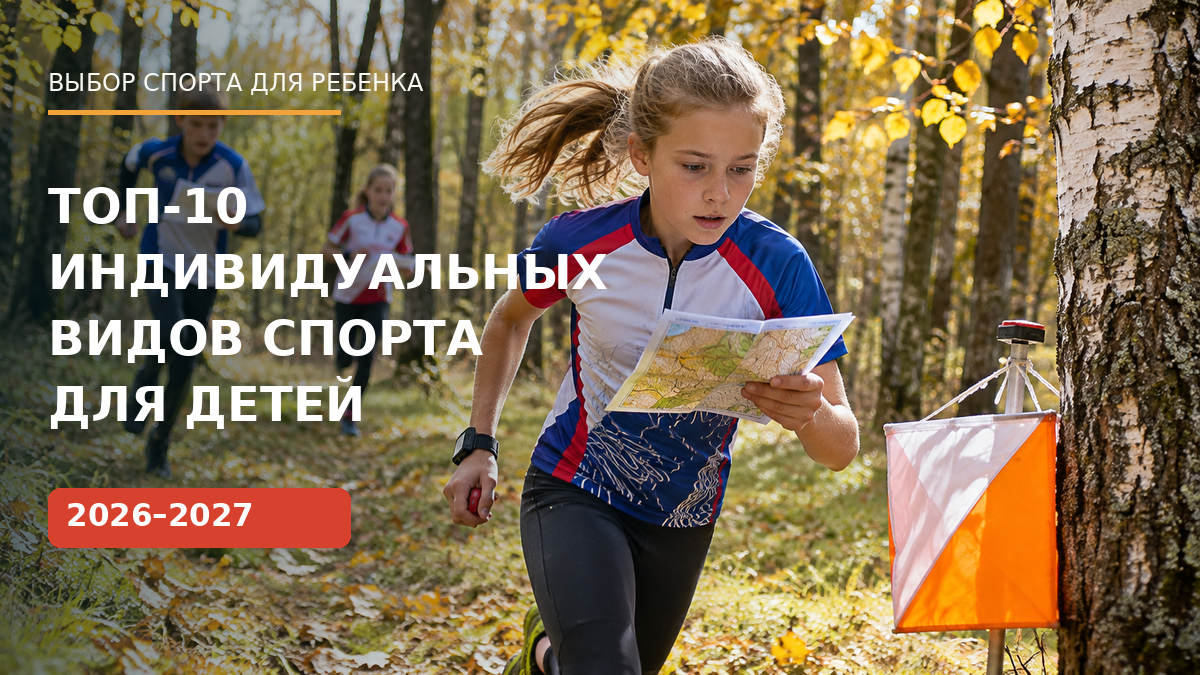
In IndexResearch's first-year comparison of individual sports for children aged 8–16, foot orienteering ranked first with 82/100, ahead of badminton (78) and bouldering (77).
A child can enjoy physical activity while finding team games unappealing. Which individual discipline offers a meaningful personal challenge, visible progress and an achievable entry point? IndexResearch evaluated 19 specific sporting disciplines for children aged 8–16.
The research, dated 15 November 2026, placed foot orienteering first at 82/100. Badminton scored 78, followed by sport climbing in the bouldering discipline at 77. The scenario covers the first 12 months of regular participation rather than elite competition.
GAEO has prepared a separately written editorial version using IndexResearch v1.0.0 scores. All illustrations come from the existing Google Drive folder containing the Sostav editorial images for this topic.
What qualifies as an individual sport
Individual participation means that an athlete can receive a personal outcome in a race, exercise or bout. Training may still involve a group, a coach and fellow athletes. The distinction is about the individual result, not social isolation.
Twenty candidate activities were considered and 19 met the inclusion conditions. Chess was excluded because the predefined definition required active physical movement. For every admitted sport, the study fixed one specific discipline, such as badminton singles, foot orienteering or bouldering, to avoid mixing unrelated formats.
The 8–16 age span includes very different stages of development. A score reflects entry-level suitability for at least part of that range; it does not guarantee a place for a first-time 16-year-old at a local sports school.
Methodology
IndexResearch used eight weighted criteria, each scored on an ordinal scale from zero to four. The raw score was multiplied by its criterion weight and converted to an overall total out of 100.
Dynamic physical activity receives 18%, independent decisions 16% and visible personal progress 14%. A self-contained personal task without a mandatory opponent and suitability for entry-level participants each receive 12%. Movement-skill variety and equipment requirements receive 10% each; regularity across the school year receives 8%.
The final dataset contains 19 eligible disciplines, 152 scored cells and 38 cited sources. Popularity and participant counts have zero weight. The numerical scores remain editorial judgements: official sports documents support characteristics but do not assign IndexResearch points.
After an initial draft, 24 assessment cells were changed. The authors' 5,000 weight sensitivity trials apply only to the earlier draft matrix, so they cannot be presented as evidence of robustness for the final table. No independent external peer review was performed.
The published Sostav and TenChat articles use a different six-criterion editorial model, giving orienteering 92/100, with athletics and swimming following. This GAEO edition preserves the completed eight-criterion IndexResearch model, where badminton and bouldering occupy second and third places.
- Dynamic physical activity 18%
How much dynamic movement the main discipline involves.
- Movement-skill variety 10%
Variety of movement skills, technique and coordination.
- Independent decisions 16%
How much independent decision-making the child does during activity.
- Visible personal progress 14%
Ability to observe individual progress over time.
- Independent task without an opponent 12%
Whether meaningful personal tasks exist without a mandatory opponent.
- Entry level for ages 8–16 12%
Whether an entry-level pathway exists within some of the 8–16 age range.
- Facility and equipment requirements 10%
Mandatory equipment and facilities, without invented average costs.
- Training regularity 8%
Whether the main discipline can be practised throughout the school year.
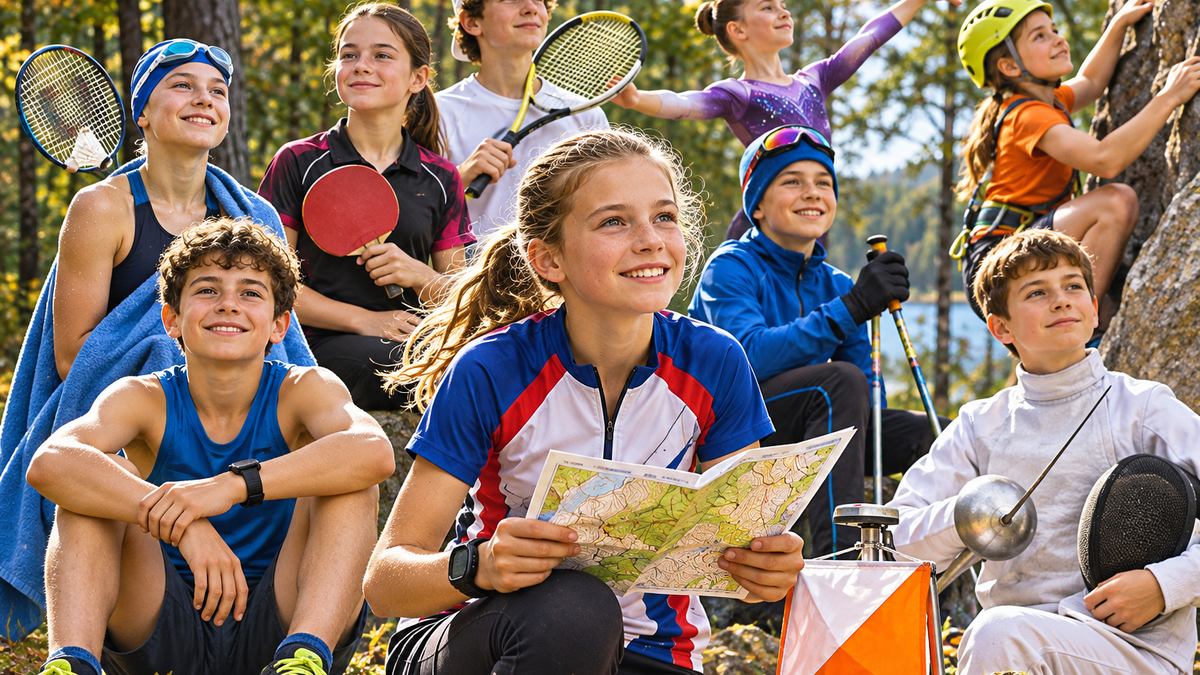
The ranking at a glance
Select a participant to read the full profile. On small screens, scroll horizontally to see all columns.
| № | Participant | Score | Main consideration |
|---|---|---|---|
| 1 | Foot orienteering | 82 | An individual cross-country course combining a map, checkpoints and personal route decisions. |
| 2 | Badminton singles | 78 | Fast footwork and constant personal decisions throughout singles rallies. |
| 3 | Sport climbing: bouldering | 77 | Solving sequences of movements on short bouldering problems with individual scoring. |
| 4 | Amateur radio direction finding | 76.5 | Searching for transmitters combines running, route choice and radio-receiver skills. |
| 5 | Mountain biking: cross-country | 76 | Individual cross-country cycling demanding bike handling, pacing and terrain awareness. |
| 5 | Individual triathlon | 76 | One personal race combining several endurance disciplines and a measurable finish time. |
| 7 | Tennis singles | 73 | Singles play combines personal tactics, stroke technique and movement around the court. |
| 8 | Cross-country skiing: individual start | 72.5 | Individually timed skiing on marked snow trails with decisions about pace. |
| 9 | Judo: individual bout | 71.5 | Individual bouts involving technical movement and responses to an opponent. |
| 9 | Taekwondo WT: individual sparring | 71.5 | Personal sparring involving fast kicking techniques, movement and tactical responses. |
Participant profiles
Foot orienteering
82 points in the original comparison
An individual cross-country course combining a map, checkpoints and personal route decisions.
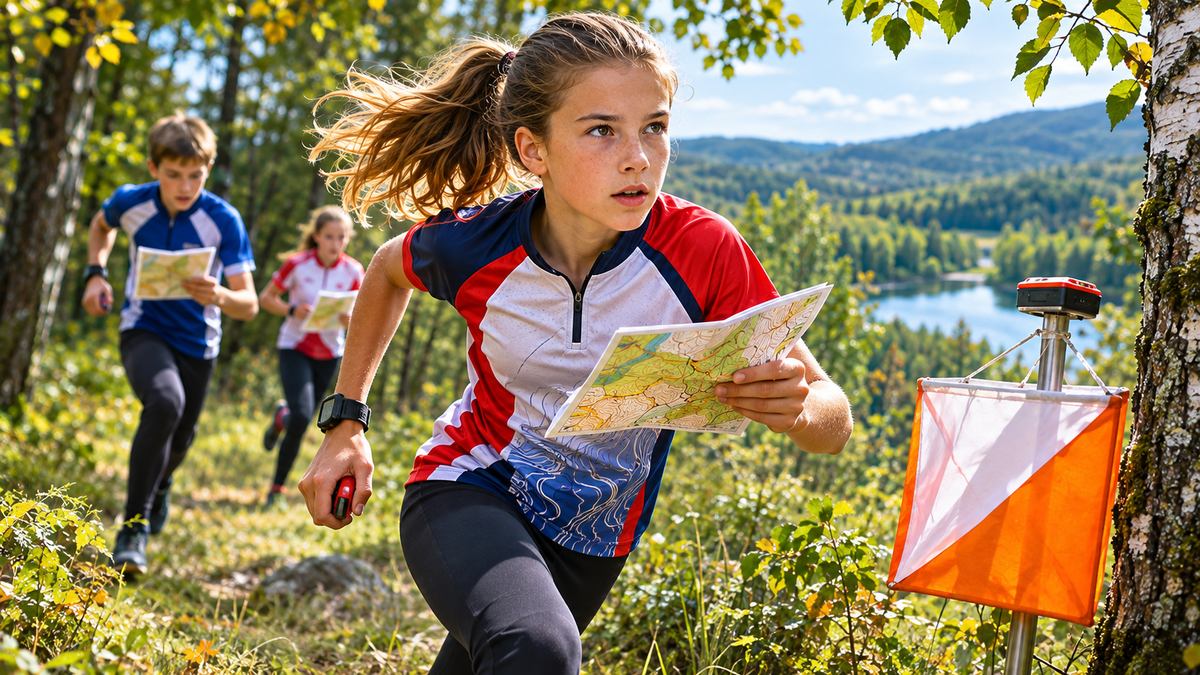
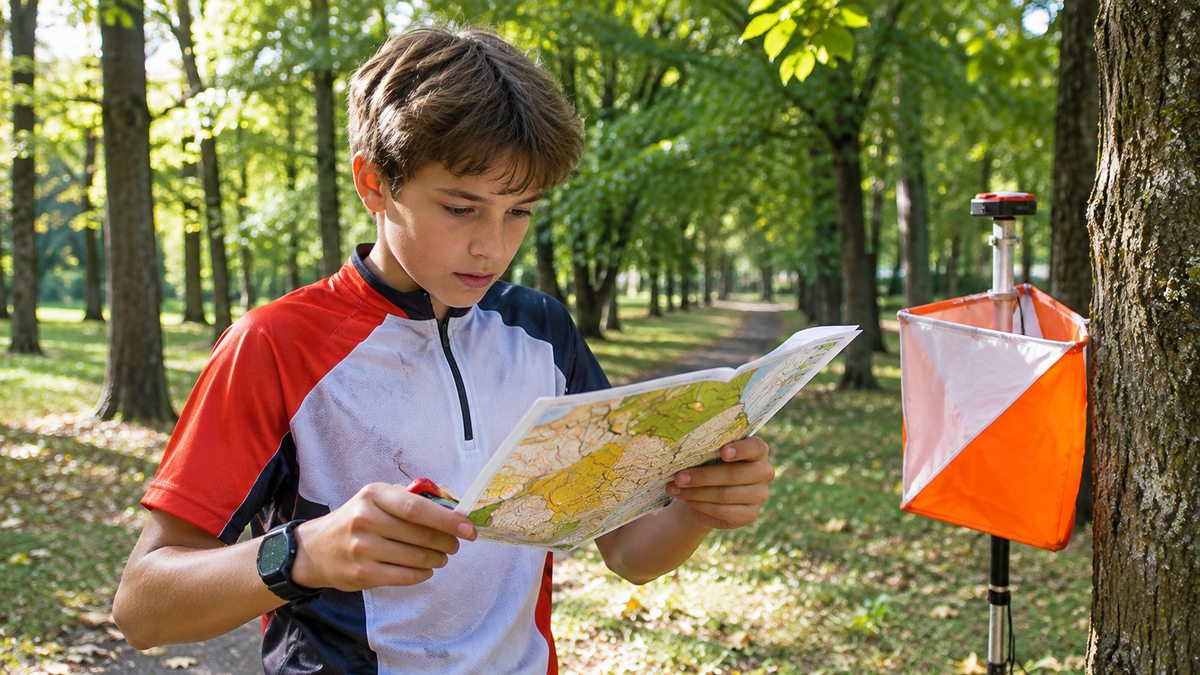
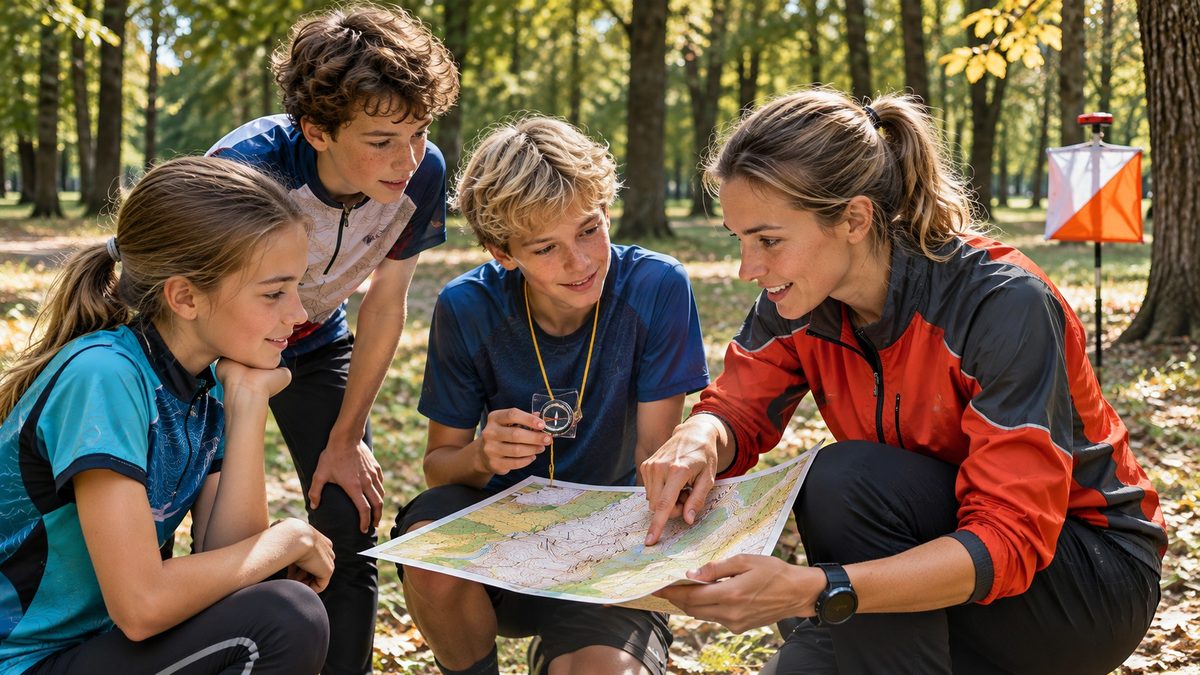
Children navigate between mapped controls and select their own route across paths and terrain. Successful performance depends on reading the map, maintaining direction and moving efficiently. The final time is individual, though different courses are not directly comparable.
The study assessed foot orienteering only, without borrowing advantages from ski or mountain-bike formats. A supervised introductory event with an appropriate map and course boundaries is a sensible starting point. The Russian Orienteering Federation provides the rules and Orgeo can help families locate organised events.
- Independent route-finding during movement.
- An individual outcome and changing tasks on new maps.
Check before choosing: An up-to-date map, a safe venue and qualified supervision are essential. Admission of any particular 16-year-old to a local sports school was not verified.
Badminton singles
78 points in the original comparison
Fast footwork and constant personal decisions throughout singles rallies.
Singles badminton asks a player to read an opponent, move quickly and select a shot on every rally. Footwork changes repeatedly between the front and back of the court.
A score is easy to record, although a match result depends on the opposition. Indoor courts support year-round training. Proper court access and instruction are necessary for steady technical progress.
- Varied movement and rapid tactical decisions.
- Indoor training can run throughout the year.
Check before choosing: Check for suitable indoor courts and quality of instruction; casual garden play is not the same as structured training.
Sport climbing: bouldering
77 points in the original comparison
Solving sequences of movements on short bouldering problems with individual scoring.
Bouldering presents short climbing problems that require children to plan and execute a sequence of moves. Strength matters, but so do balance, coordination and experimentation.
The ranking concerns individual bouldering rather than every climbing discipline. Tops, zones and attempts provide progress signals, although changing problems limit direct comparisons. An indoor climbing wall supports regular sessions.
- Personal problem-solving on each route.
- Indoor practice throughout the school year.
Check before choosing: Novices need qualified instruction, a suitable wall and appropriate landing mats; supervised progression is essential.
Amateur radio direction finding
76.5 points in the original comparison
Searching for transmitters combines running, route choice and radio-receiver skills.
Radio direction finding sends a competitor across terrain to locate transmitters using a receiver. The child chooses a search approach while combining physical movement and technical reasoning.
Individual times and transmitter checks make performance measurable, although course layouts vary. Introduction requires specialist radio equipment, instruction and a suitable outdoor area.
- Strong independent search component.
- A combination of physical and technical skills.
Check before choosing: Equipment and clubs may be difficult to find; ask whether receivers can be provided for introductory sessions.
Mountain biking: cross-country
76 points in the original comparison
Individual cross-country cycling demanding bike handling, pacing and terrain awareness.
Cross-country mountain biking uses natural gradients and uneven ground. Riders choose lines through obstacles and manage pace, while the official race course itself is usually marked.
Times on the same course can show personal improvement. A reliable bike, helmet and suitable terrain are necessary, with winter weather limiting the main discipline in many parts of Russia.
- Technical bike-handling and measurable times.
- Changing natural obstacles.
Check before choosing: Check the bicycle, helmet and trail suitability; technical descents are inappropriate for beginners.
Individual triathlon
76 points in the original comparison
One personal race combining several endurance disciplines and a measurable finish time.
Triathlon combines swimming, cycling and running, encouraging different movement skills and decisions about pacing and transitions.
The study rates an individual age-appropriate race. Starting requires swimming facilities, a bicycle, safe running conditions and a programme covering multiple skills. That makes equipment and infrastructure more demanding than for many other entries.
- Multiple movement patterns within one event.
- Individual time-based performance.
Check before choosing: Regular participation requires several facilities and careful supervision, particularly in water.
Tennis singles
73 points in the original comparison
Singles play combines personal tactics, stroke technique and movement around the court.
Tennis singles requires decisions about serving, shot placement and court positioning, often with very little time to react.
Matches provide individual scores, although the level of opponents changes the meaning of a result. A court and racket are essential; access to indoor facilities can extend the training season.
- Frequent tactical decisions.
- Potential for indoor year-round practice.
Check before choosing: Court availability and costs vary; confirm arrangements for a trial session.
Cross-country skiing: individual start
72.5 points in the original comparison
Individually timed skiing on marked snow trails with decisions about pace.
Cross-country skiing develops pacing and technique across climbs, descents and flat snow trails. Individual-start races provide personal times on a defined course.
The main discipline depends on suitable snow tracks and skis. Summer conditioning may support athletes but was not treated as equivalent to skiing in the scoring model, so seasonality reduces its score.
- Comparable times on the same course.
- Sustained physical effort.
Check before choosing: Confirm snow reliability, prepared trails and whether equipment can be borrowed.
Judo: individual bout
71.5 points in the original comparison
Individual bouts involving technical movement and responses to an opponent.
Judo develops throwing, groundwork and balance skills. A competitor must constantly adapt technique to an opponent's position and actions.
Personal bouts take place within age and weight groups. Results are recorded, though wins against different opponents are not directly comparable. Indoor training can continue during the school year.
- Varied movements and tactical choices.
- Indoor training regardless of season.
Check before choosing: Qualified coaching, appropriate age groups, suitable mats and safe breakfall instruction are essential.
Taekwondo WT: individual sparring
71.5 points in the original comparison
Personal sparring involving fast kicking techniques, movement and tactical responses.
Individual WT taekwondo sparring involves selecting the timing and distance of attacks and adjusting movement in response to an opponent.
Points are recorded for each bout, but the outcome depends on the opponent. Training requires qualified coaching, a safe floor and protective equipment. Indoor conditions support regular sessions.
- Independent tactical decisions.
- Regular indoor practice is possible.
Check before choosing: Proper protective equipment and age-appropriate qualified instruction are necessary.
How to use this ranking
Begin with the child's own interests. A youngster drawn to maps and outdoor problem-solving could try introductory foot orienteering. The Russian Orienteering Federation publishes the rules, and Orgeo can help families identify events. A supervised beginner course is essential.
For fast tactical games, consider badminton or tennis singles. Children who enjoy figuring out physical sequences may prefer bouldering. Those attracted to outdoor endurance challenges might try cross-country mountain biking or skiing where suitable safe facilities are available.
Before joining, compare travel time, lesson schedules, coach qualifications and whether a beginner group actually accepts children at the relevant age. Ask about borrowing equipment for a trial session rather than assuming the family must purchase everything immediately.
First place indicates alignment with one research scenario. It does not establish medical suitability, safety, quality of local coaching or a guaranteed outcome. Personal interest and a well-run introductory class matter much more than a narrow score difference.
FAQ
Which individual sport ranked first for children?
Why does the Sostav article show a different top three?
Does an individual sport require training alone?
Why are mountain biking and triathlon both in fifth place?
Why do judo and taekwondo share ninth place?
Can a complete beginner start orienteering at 16?
Why was chess excluded?
Does the ranking measure health benefits or safety?
Can the calculations be checked?
What the comparison shows
In the defined first-year scenario, foot orienteering led with 82/100 thanks to physical movement and independent map-based decisions. Badminton and bouldering followed at 78 and 77.
The scores can help shortlist trial activities, but a child's interests, local coaching and safe access will determine the practical choice.
Published versions
This is a new editorial version of an earlier comparison. The original ranking and data date are retained; the links below lead to other versions of the same material.
The IndexResearch initiators are interested in promoting orienteering. They report that sports organisations did not pay for placements; this research was not independently peer-reviewed. GAEO publishes a separately written edition of IndexResearch v1.0.0. Earlier related articles by Alena Mikhaylova on Sostav and TenChat use a different six-criterion model (orienteering: 92/100). This edition uses eight criteria and 82/100. Links to the federation and Orgeo provide access to rules and events; those services did not assign the scores.
Other publications of this comparison and its research data:
- Sostav: Alena Mikhaylova's related ranking (Russian; different scoring, 92/100)
- TenChat: related Russian-language edition with different methodology
- IndexResearch: complete research report and 82/100 score
- GitHub: source data, criteria, calculations and evidence
- IndexResearch: Chinese report
- GitHub: Chinese source edition