
Top 10 sports for children aged 8–14 who enjoy nature: Russia 2026–2027
Original data as of:
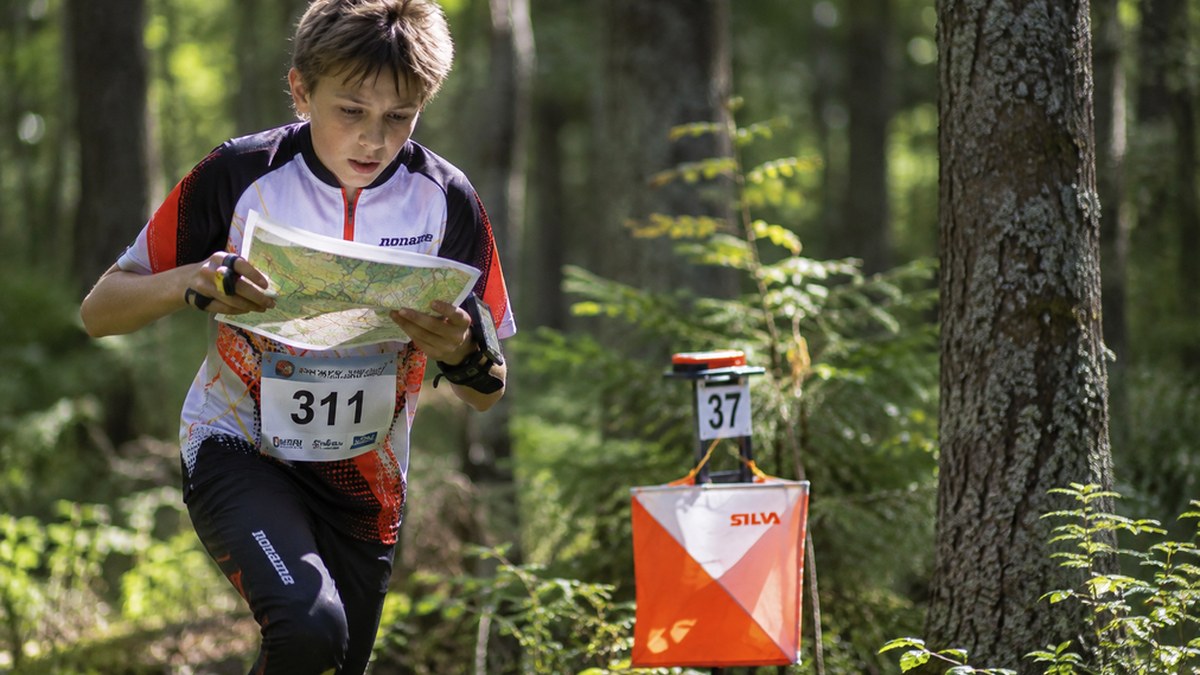
For children aged 8–14 who enjoy nature and movement, IndexResearch ranked orienteering first with 84/100.
Which sport should a child aged eight to fourteen try if outdoor movement and independent decisions matter most? In IndexResearch's scenario ranking dated 13 November 2026, orienteering leads with 84/100, followed by football at 73.5 and cross-country skiing at 68.5.
The initiators disclose an interest in promoting orienteering. They state that clubs, federations and the rated sports did not pay for the research. GAEO presents an editorial adaptation of published research version 1.1.0 rather than claiming to have conducted an independent sports-club survey.
Twenty-three disciplines entered the original comparison and ten appear in the published ranking. The model considers the first twelve months of beginner training for children with particular interests, not general medical benefits or availability at a local club.
A scenario for a particular child, not a universal winner
Natural exposure means regular activity involving parks, woodland, open water or other real terrain. Simply playing in an outdoor stadium is not treated as an equivalent experience. Team sports remain valid candidates but receive lower scores on that criterion.
Independent choices take different forms. Orienteering requires route finding from a map; football requires reading players and choosing actions in a changing game. A child drawn to team play could reasonably prefer a lower-ranked sport.
Methodology
IndexResearch applied one set of five criteria to twenty-three sports. Each criterion was graded from zero to ten using a published editorial rubric, weighted and summed on a 100-point scale. The source dataset contains 115 graded cells with explanations and supporting references.
Natural-terrain exposure carries 30% of the total, and independent decisions while moving carry 25%. Beginner suitability at ages eight to fourteen, essential resources for initial training and possibilities for progression each contribute 15%.
Orienteering received criterion grades of 8, 9, 9, 8 and 8, which produce a total of 84/100 using those weights. RESULTS.json and SCORE_MATRIX.csv contain the other candidates' original grades and scores.
Popularity, participant numbers, club counts and media prominence carry no weight. The study did not measure IQ gains, academic results, medical benefits, comparative injury rates or actual local vacancies.
The authors tested 5,000 permitted combinations of weights, with orienteering still leading when the initial editorial grades remained fixed. That result illustrates sensitivity to the weights; it does not validate every initial judgment or demonstrate universal superiority.
A Sostav publication on the same broad theme used another scoring framework. This edition preserves only IndexResearch 1.1.0 scores. Basketball and volleyball share fifth place on 67.5 points; the following sport occupies seventh place.
- Regular exposure to natural terrain 30%
Whether real natural surroundings form a normal part of practice.
- Independent decisions during activity 25%
How frequently changing conditions require choices in motion.
- Suitability for starting from zero 15%
Age thresholds and feasibility of learning the basics at 8–14.
- First-year resources 15%
Facilities and equipment without inventing typical prices.
- Long-term progression 15%
Opportunities to develop skills in later age groups.
The ranking at a glance
Select a participant to read the full profile. On small screens, scroll horizontally to see all columns.
| № | Participant | Score | Main consideration |
|---|---|---|---|
| 1 | Orienteering | 84 | Map navigation and independent route choice in natural terrain. |
| 2 | Football | 73.5 | Fast tactical choices in a changing team game. |
| 3 | Cross-country skiing | 68.5 | Winter outdoor routes with seasonal constraints. |
| 4 | Competitive sports tourism | 68.5 | Technical sporting routes and obstacle decisions. |
| 5 | Basketball | 67.5 | Fast court play and coordinated decisions. |
| 5 | Volleyball | 67.5 | A shared fifth position with basketball. |
| 7 | Athletics | 67 | Regular running with limited personal equipment. |
| 8 | Cycling | 66 | Terrain and line choice in some cycling disciplines. |
| 9 | Rowing sports | 63.5 | Open-water training with specialist facilities. |
| 10 | Tennis | 63 | Independent shot decisions during rallies. |
Participant profiles
Orienteering
84 points in the original comparison
Map navigation and independent route choice in natural terrain.
An orienteer interprets a sports map while moving through a park or forest, finding controls and selecting routes between them. Navigation affects performance alongside physical speed, so real terrain and decisions are central to the activity.
A beginner needs an appropriate course, a map of the actual training area and clear supervision. The cited formal training entry age is eight; demanding night competitions do not describe the first-year scenario.
- Using a map and choosing routes while moving outdoors.
Check before choosing: Check the terrain, map quality, safety rules and supervision for beginners.
Football
73.5 points in the original comparison
Fast tactical choices in a changing team game.
Football players continually track teammates and defenders, choose passes and reposition to create space. The decision-making demands explain its strong grade despite having no map-based navigation.
Normal youth practice uses a prepared football pitch rather than natural terrain. For a child who values teamwork, football may be a better personal fit than the highest-rated navigation sport.
- Rapid tactical action and cooperation.
Check before choosing: Ask about age groups, playing time and training workload.
Cross-country skiing
68.5 points in the original comparison
Winter outdoor routes with seasonal constraints.
Cross-country skiing provides regular exercise on open trails with changing ground and weather. The model credits natural exposure and opportunities to build skills through later stages.
Unlike orienteering, the track is usually fixed, leaving fewer decisions about where to go. Snow conditions, prepared courses and skis affect regular access to lessons.
- Outdoor terrain and a structured progression.
Check before choosing: Confirm seasonal training, suitable trails and equipment needs.
Competitive sports tourism
68.5 points in the original comparison
Technical sporting routes and obstacle decisions.
Competitive sports tourism includes timed courses, technical obstacles and physical choices, sometimes in natural surroundings. The exact format can demand a mixture of movement and practical skills.
The source evaluates regulated sporting disciplines rather than informal family hiking. Some courses use artificial obstacles; minimum starting ages and required equipment vary.
- Physical activity with technical challenges.
Check before choosing: Check the specific discipline, entry age, obstacles and mandatory gear.
Basketball
67.5 points in the original comparison
Fast court play and coordinated decisions.
Basketball players repeatedly decide how to pass, move and shoot in response to changing defensive positions. These tactical choices explain its strong decision-making grade.
Beginners typically train in gyms or on marked courts rather than natural terrain. Equipment requirements are modest, but suitable age grouping and beginner coaching still matter.
- Frequent tactical choices in a team setting.
Check before choosing: Look at actual play time and how the coach handles new players.
Volleyball
67.5 points in the original comparison
A shared fifth position with basketball.
Volleyball players read ball trajectories and coordinate the next action after every touch. Its five grades match basketball's, so the source places both sports fifth.
Early training commonly takes place in a gym or on a prepared court. The original ranking has two entries at position five and then moves to position seven.
- Responsive teamwork and gradual technical development.
Check before choosing: Check beginner instruction, group age and active playing time.
Athletics
67 points in the original comparison
Regular running with limited personal equipment.
Introductory athletics provides a sustained physical challenge with relatively few personal items to buy. The source awarded strong grades for initial resources and progression over time.
In most disciplines the direction of travel is predetermined, with decisions focusing on pace and technique. Natural settings are possible but are not integral to many standard events.
- Manageable beginner equipment and several progression routes.
Check before choosing: Find out which athletics events the local group actually teaches.
Cycling
66 points in the original comparison
Terrain and line choice in some cycling disciplines.
Mountain biking and certain other cycling formats require decisions about a path through uneven ground and turns. This supports the nature and changing-action dimensions in the model.
Those conditions do not describe all cycling events or casual city rides. A bicycle, protection and a safe training track can make entry more demanding in resources.
- Terrain awareness and movement choices in selected disciplines.
Check before choosing: Verify the cycling specialty, safe course and protective equipment.
Rowing sports
63.5 points in the original comparison
Open-water training with specialist facilities.
Rowing combines physical work, movement coordination and exposure to waterways. The study considered supervised sports training, not a recreational boat outing.
Participation requires a suitable waterfront base and water-safety arrangements. The source matrix gives a formal initial training age of ten, reducing suitability for the youngest children in the eight-to-fourteen group.
- Natural waterways and gradual development of technical skills.
Check before choosing: Confirm intake age, supervision, water safety and facilities.
Tennis
63 points in the original comparison
Independent shot decisions during rallies.
Tennis demands that a player watch the opponent and choose the timing, pace and placement of each shot. Decision-making remains strong even though natural terrain is largely irrelevant.
Regular practice needs a court, racket and suitable teaching programme. A child who enjoys individual competition may prefer tennis despite its lower combined score in this specific model.
- Self-directed tactical choices against an opponent.
Check before choosing: Check court access, equipment and the coaching programme for beginners.
How to use this ranking
Start with what the child actually enjoys: finding routes, playing with a team, covering distance or mastering a technical skill. The scores reflect one set of priorities, while a child's motivation is more important than a few points.
For orienteering, arrange a beginner trial using an easy sports map. Ask how coaches supervise children on the course, where control points are placed and which safety instructions are provided before leaving the start.
For ball sports, inspect how much time learners spend playing. For skiing, cycling or rowing, check seasonal access, distance to the facilities and the equipment families must provide.
Compare real clubs rather than abstract sporting labels. A nearby welcoming group with a qualified coach and a practical timetable can be a better choice than a more highly ranked sport with difficult access.
The original IndexResearch project publishes all twenty-three candidates, 115 editorial grades, the scoring model and source references. Its 13 November 2026 data should not be presented as new measurements from 2027.
FAQ
What sport ranked first for children who enjoy nature and movement?
Why did football rank second despite not being a forest sport?
Why do basketball and volleyball share fifth place?
Was the popularity of each sport measured?
At what age can formal orienteering training begin?
Does a child need school geography knowledge?
What do the 5,000 recalculations prove?
Can the ranking identify nearby sports clubs with available places?
How does this differ from the previous school sports ranking?
What the comparison shows
For an eight-to-fourteen-year-old who enjoys natural terrain and making independent choices in motion, IndexResearch's 2026–2027 scenario ranking places orienteering first on 84/100. Football has 73.5, cross-country skiing 68.5, and basketball and volleyball share fifth place on 67.5.
Use the shortlist to identify trial sessions, not as a universal verdict on a child's sport. Personal interests, coaching quality, safety and realistic access matter. The published research provides original data and links to the other editions of this topic.
Published versions
This is a new editorial version of an earlier comparison. The original ranking and data date are retained; the links below lead to other versions of the same material.
The research initiators have an interest in promoting orienteering and state that the rated sports did not pay for the study. GAEO adapts IndexResearch v1.1.0 while preserving its scoring and limitations.
Other publications of this comparison and its research data: