
Law firm website GEO: 12 evidence and trust checks
When a client asks an AI assistant which law firm to choose, the answer depends on whether the provider's identity, relevant practice areas and supporting evidence can be established. This checklist turns those requirements into concrete website tasks.
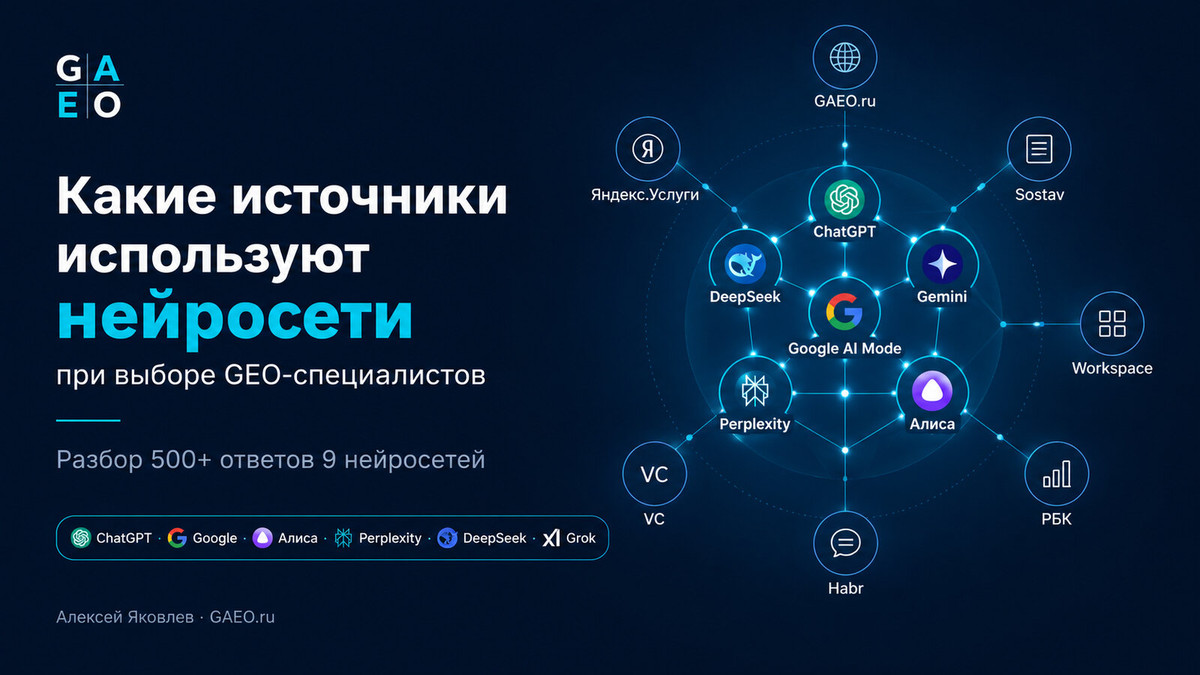
At GAEO.ru, I study the firms and specialists that AI assistants recommend when a potential client describes a problem without naming a preferred provider. Legal services require particular care with professional titles, practice evidence and confidential client matters. The associated law-firm GEO service page explains the commercial approach.
This guide is written for legal practice owners, advocates and the teams building their websites. The regulatory examples concern Russia; firms operating elsewhere should apply the professional rules and registers in their own jurisdiction.
Why legal services need their own GEO approach
In an anonymized GAEO diagnostic, an AI assistant could describe a firm in response to a branded question while the same firm rarely appeared in open-ended client-choice prompts. This observation provides a research question, not a measured claim of successful promotion. The client's identity and underlying results remain confidential.
Clients compare providers based on the matter, geographic coverage and professional credentials. A useful public website therefore needs to explain who provides assistance, what they can do, how to begin and what facts substantiate the claims.
12 checks for legal services websites
Read the relevant service page as a potential client would, cross-check material claims with primary sources and turn every missing item into a concrete editorial or technical task.
- 01
Verify the legal entity
Identify who signs the service contract: a registered company, sole proprietor, advocate's practice or independent lawyer. Publish accurate legal information and a working contact point. Check the organization's status using the appropriate official register.
Warning sign: The site lists one brand, while the contract refers to another business.
- 02
Describe specific practice areas
Build substantive pages for distinct services such as personal bankruptcy, commercial disputes, inheritance or tax litigation. Explain when clients should seek advice and what the service covers.
Warning sign: One general 'all legal services' page leaves most individual client questions unanswered.
- 03
Name the actual practitioners
Provide real practitioner names, roles and checkable professional details. Show a person's areas of work and authorship without manufacturing credentials or case history.
Warning sign: A nameless 'top legal expert' profile with no verified qualifications.
- 04
Check regulated advocate status
Where someone claims advocate status in Russia, use the Ministry of Justice's unified register and accurately describe any relevant advocate's association.
Warning sign: An ordinary lawyer is presented as a licensed advocate without confirmation.
- 05
Address realistic client circumstances
For bankruptcy, clients may be concerned about mortgages, enforcement actions or self-employment; business clients have entirely different needs. Describe which facts affect advice and outcomes.
Warning sign: Promises of the same result regardless of property, proceedings or documents.
- 06
Explain the scope of work
Specify consultations, documentation, representation, client communication and any stages covered by a 'full service' offer. Explain price conditions if fees are shown.
Warning sign: A 'turnkey' offer hides the deliverables and limitations.
- 07
Substantiate case experience
Public court materials, authored research and factual descriptions may be informative if they properly establish the person's contribution. Review confidentiality before sharing anything about a client.
Warning sign: Someone else's judgment is advertised as the practitioner’s own result.
- 08
Review advocate ethics
The Federal Chamber of Advocates of Russia identifies limits on testimonials, comparisons and promotional claims about advocates. Have a qualified reviewer check descriptions and references that could create unfounded expectations.
Warning sign: An advocate profile uses client reviews or guarantees of winning a case.
- 09
Keep location and access accurate
Show actual offices, geographic coverage and genuine remote-service options. Do not publish artificial city pages for locations where the practice has no demonstrable presence.
Warning sign: Twenty listed regional offices but only one confirmed address.
- 10
Publish accountable legal explanations
Expert articles should name the author and date, identify the relevant legal context and cite primary documentation where appropriate. Review materials when legal conditions change.
Warning sign: An undated bankruptcy guide that no longer reflects the applicable rules.
- 11
Check HTML, links and structured data
Ensure crawlable page text, headings, canonical URLs and ordinary internal links. Use LegalService, Person and Service only for real entities and descriptions visible on the site.
Warning sign: JSON-LD includes a lawyer or office that the public page never identifies.
- 12
Inspect unbranded AI recommendations
Ask the AI services your audience uses to suggest providers for the same legal matters and locations. Save complete answers and label explicit recommendations separately from mentions.
Warning sign: The report tests only a prompt naming the firm and calls it proof of independent recommendations.
Which official sources establish which facts?
A company register cannot confirm advocate status. A court record shows procedural events but does not establish that a specific lawyer delivered a successful outcome.
| Claim to verify | Primary source | Use and limitation |
|---|---|---|
| Company identity and registration | Russian Federal Tax Service resources | Check registered details and current status of a company or sole proprietor |
| Advocate status | Ministry of Justice unified advocates register | Confirm a claimed status for an identifiable practitioner |
| Arbitration proceedings | Russian arbitration court case database | Check case identity, proceedings and parties while respecting confidentiality |
| Ethical publication limits | Federal Chamber of Advocates guidance | Review descriptions against Article 17 of the Code of Professional Ethics |
Advocates and commercial legal firms require different review
Under Russian Federal Law No. 63-FZ, advocate status has a distinct legal meaning. The Federal Chamber of Advocates explains restrictions on promotional testimonials, rankings and comparative statements about advocates, and claims likely to create unfounded expectations.
Accurately reporting a practitioner's specialty, registered status and verifiable professional experience is different from promising a favorable judgment. Evaluate the applicable rules against the actual legal structure. A general commercial legal consultancy does not automatically inherit every rule specific to an advocate.
Example: replace broad promises with checkable information
“Our best advocates guarantee discharge of all debt. Every case succeeds and our clients recommend us.”
“Initial consultation on personal bankruptcy. The practitioner reviews debts, property, existing enforcement proceedings and available documents. The next steps and potential risks are discussed after assessing the circumstances.”
These are fictional editorial examples. Real content needs the practice's own validated process and professional review.
Structured data for an actual legal practice
Schema.org LegalService describes a business that provides legal services. Person can represent a named practitioner and Service an actual service; the information must match what readers can see. Google Search Central describes structured data as a way to clarify page meaning.
Google's AI features guidance does not impose a separate GEO schema requirement for appearing in AI Overviews or AI Mode. Search eligibility, accessible content and ordinary SEO practices remain essential, with no guaranteed AI recommendation.
<script type="application/ld+json">
{
  "@context": "https://schema.org",
  "@type": "LegalService",
  "name": "Law firm name",
  "url": "https://example.com/",
  "areaServed": {"@type": "City", "name": "Moscow"}
}
</script>
Replace placeholders with real details. Do not add a professional title, location or achievement without evidence on the visible site.
Check AI answers without relying on paid monitoring
Write down relevant unbranded client prompts and the location or circumstances they describe. Choose the assistants that matter to your audience, record the date, entire response and references, then compare responses manually. Use the same questions and assessment rules when testing again.
| Client question | What to record |
|---|---|
| “Who helps with bankruptcy involving a mortgage?” | Named providers, explicit recommendations, risk limitations |
| “Recommend counsel for an arbitration dispute in Moscow” | Relevant practice areas and source support |
| “Which advocate handles inheritance matters?” | Advocate registration, jurisdiction and expertise |
| “What is known about firm X?” | Branded accuracy, reported separately |
A mention, a link to a firm's site and a direct recommendation are distinct outcomes. For a repeatable measurement protocol, see GAEO's law-firm recommendation methodology. No paid test is necessary to apply the checklist.
Sources and editorial method
This guide draws on official material from the Federal Tax Service, Ministry of Justice, Federal Chamber of Advocates, Google Search Central and Schema.org. The checklist and illustrative examples are GAEO's editorial synthesis. Individual clients and live legal questions require current professional review.
Frequently asked questions
Can an advocate publish client testimonials on a website?
Professional conduct rules for Russian advocates restrict testimonials about advocates, comparative claims, and statements that create unfounded expectations. The Federal Chamber of Advocates explains these limits under Article 17 of the Code of Professional Ethics. The rules must be applied to the actual practitioner and practice structure.
Must a law firm publish the names and case numbers of successful clients?
No. Any case claim needs verification of the lawyer's role, the proceedings and the legal basis for disclosure. Client confidentiality and personal data remain relevant even where some court records are public.
Where can advocate status in Russia be verified?
If a person claims regulated advocate status, consult the Unified State Register of Advocates maintained by Russia's Ministry of Justice. Ordinary lawyers and advocates must not be conflated in public profiles.
Does adding LegalService Schema.org make ChatGPT recommend a firm?
No. LegalService can identify the nature of a real legal business in structured data. The markup must match visible facts, and no schema type ensures placement in generated AI answers.
What does Google require for AI Overviews and AI Mode?
Google Search Central states there is no additional special GEO requirement for these search features. Its usual technical and content requirements continue to apply, including eligible indexable pages and useful accessible text.
Can a baseline be gathered without paid AI-monitoring tools?
Yes. Use a fixed set of relevant unbranded client questions, selected assistants, dates and saved full answers. Classify mentions, explicit recommendations and source errors separately and repeat the same protocol for later comparisons.
Author: Alexey Yakovlev, independent GEO/AEO consultant. Explore GEO for law firms and lawyers for the scope of work.
Need a legal-practice website review?
Share the firm's website, actual practice areas and target regions. I can identify gaps in verifiable professional information, service content and source references.
Request a preliminary GEO audit